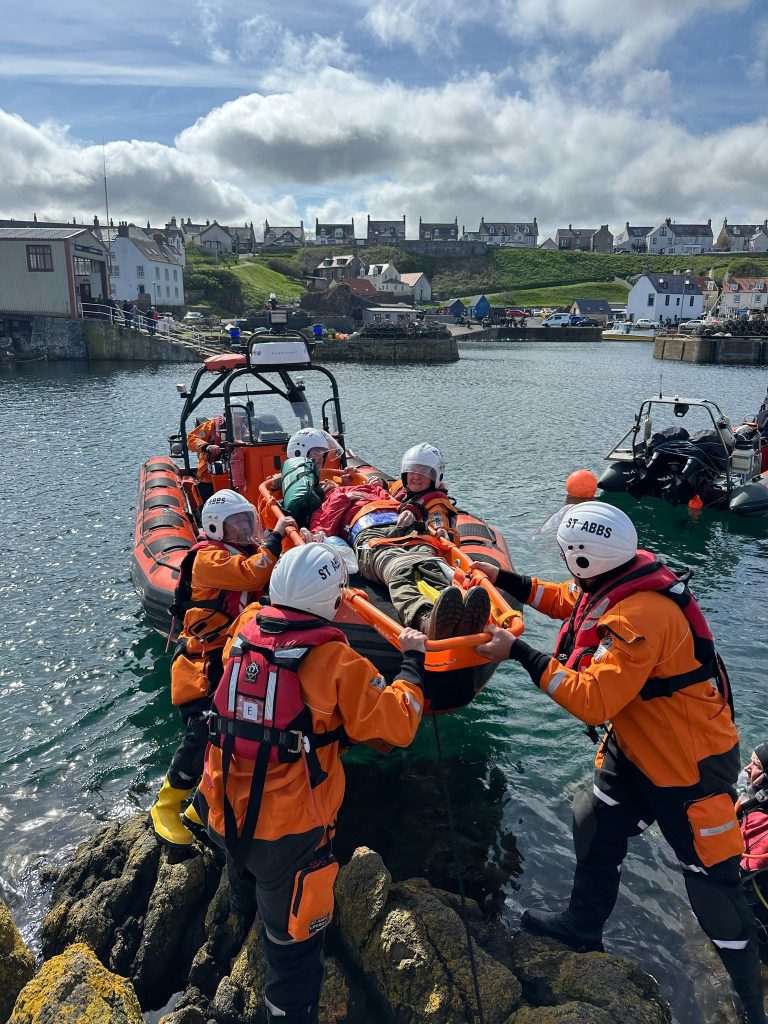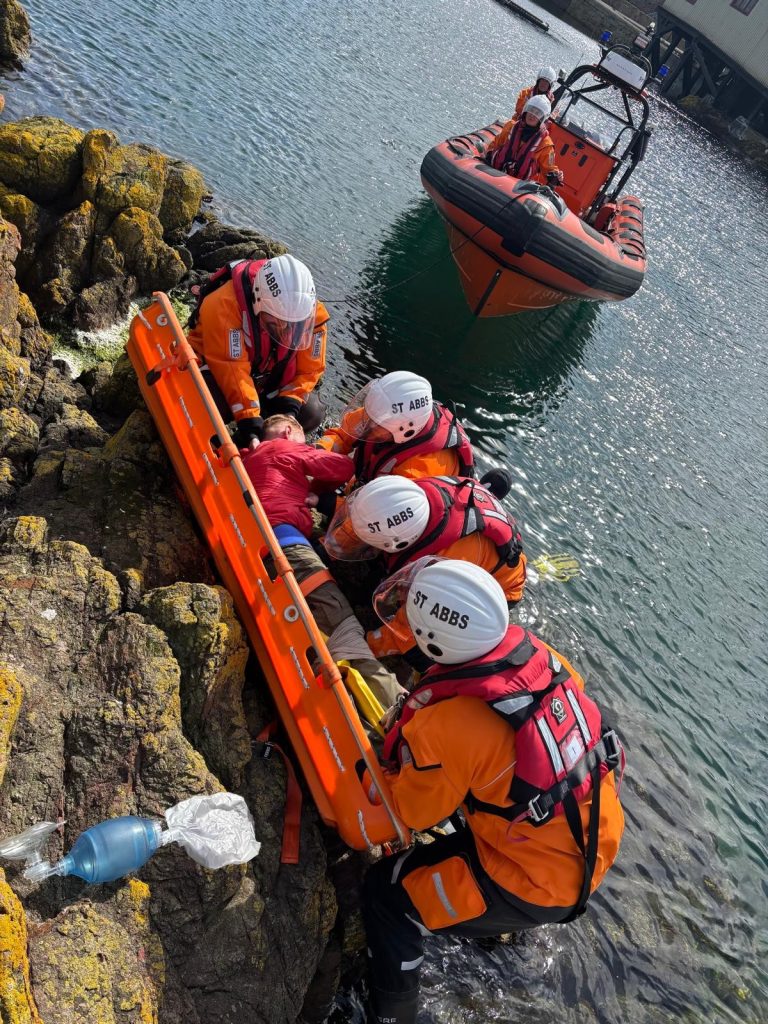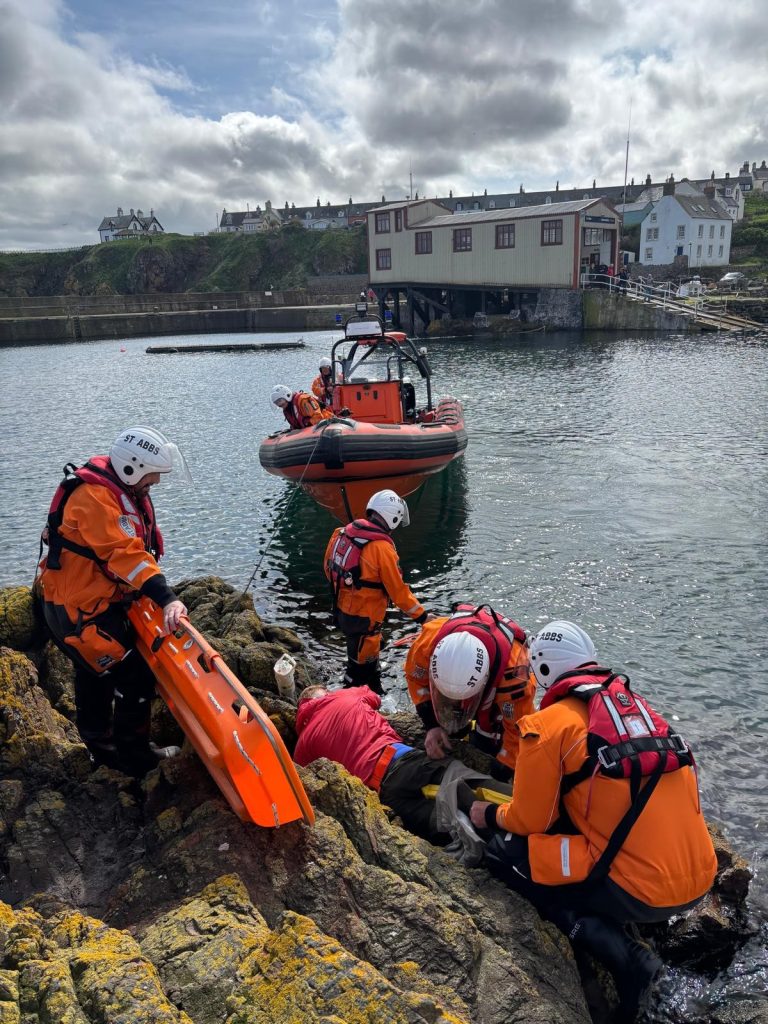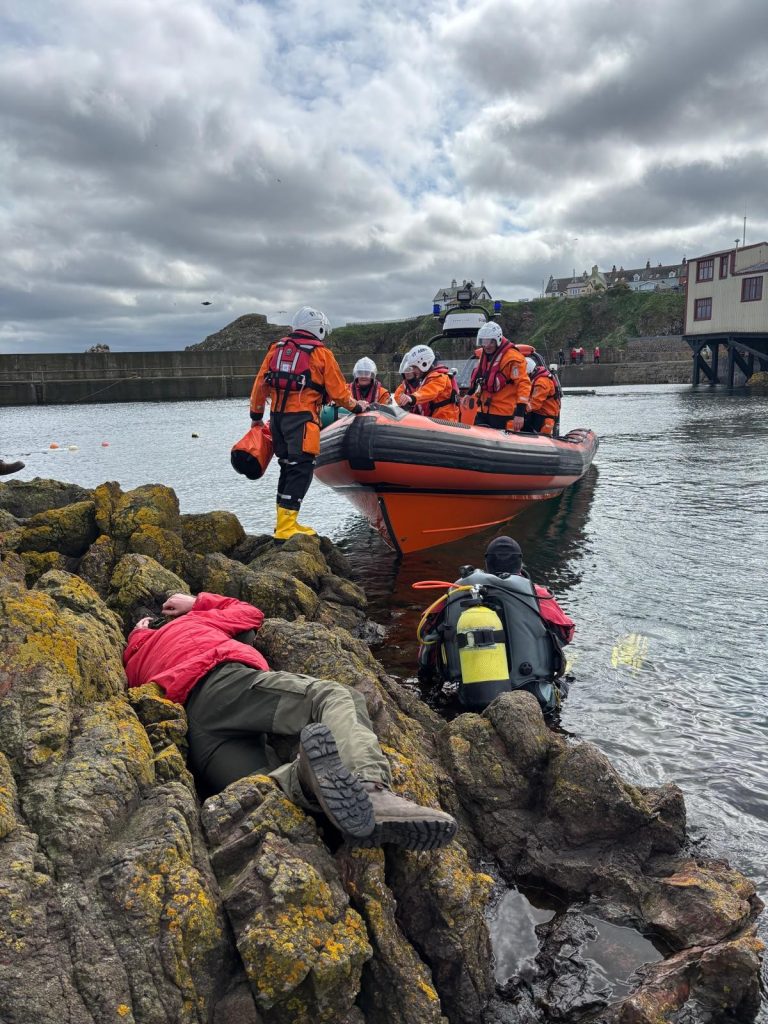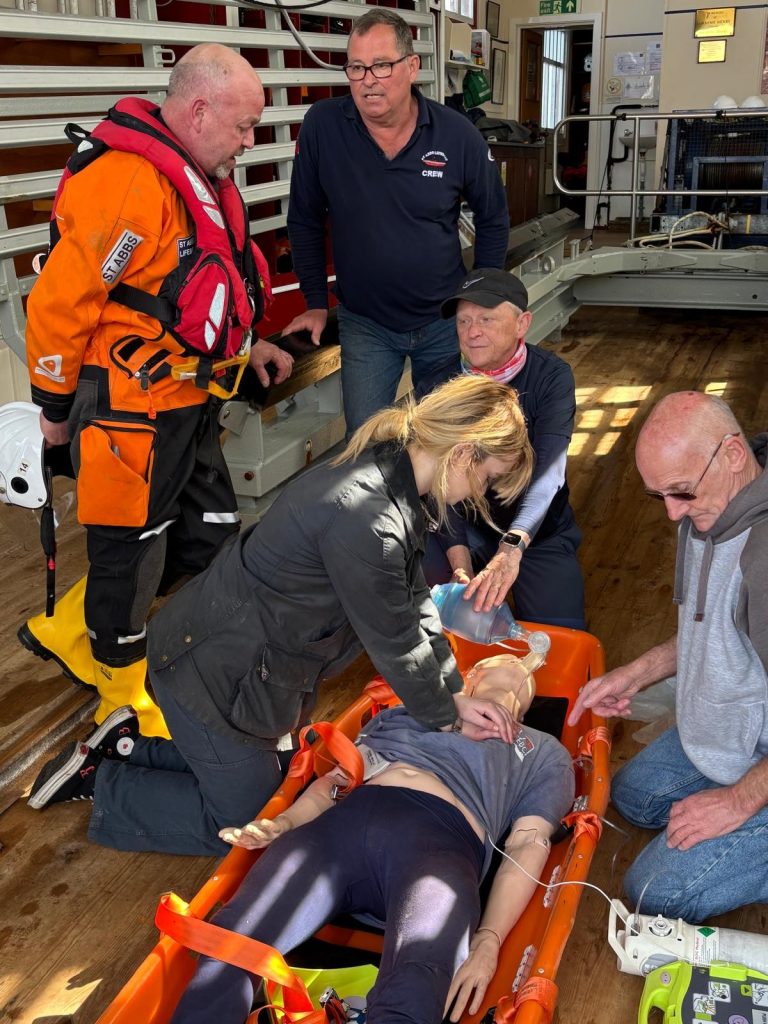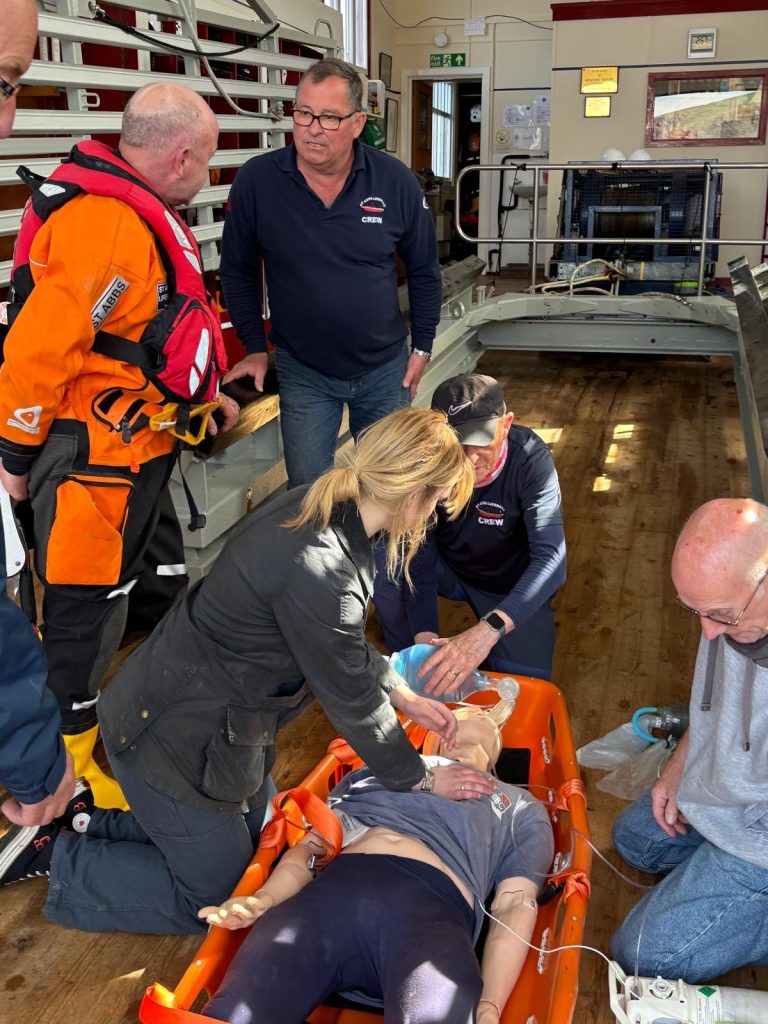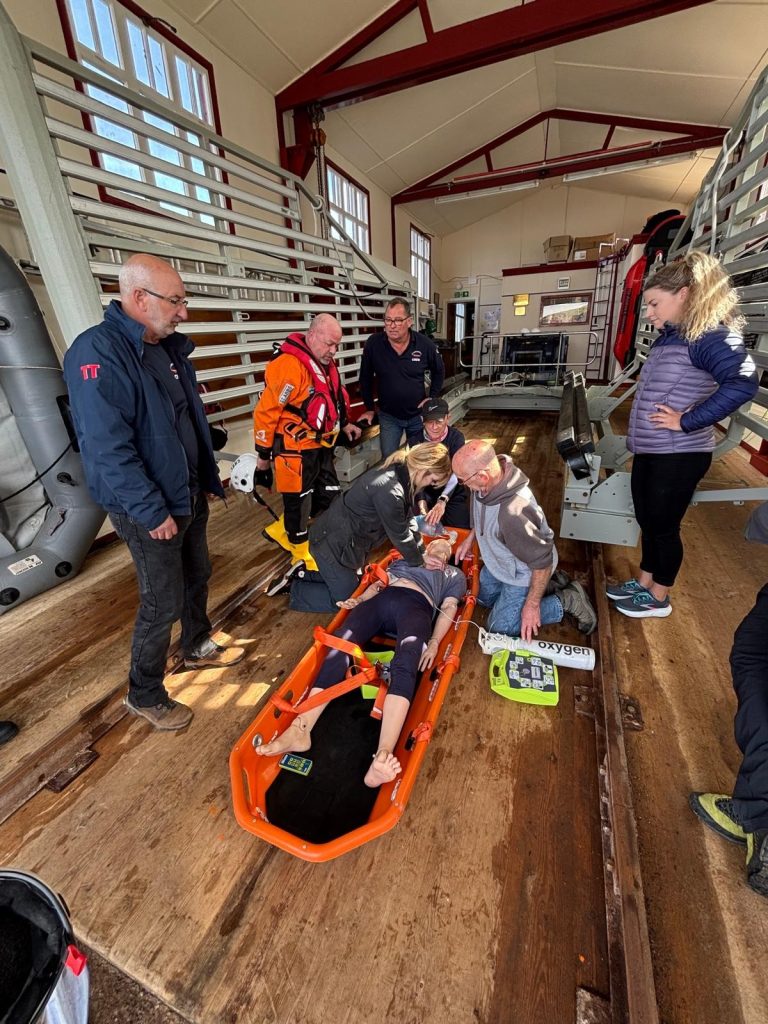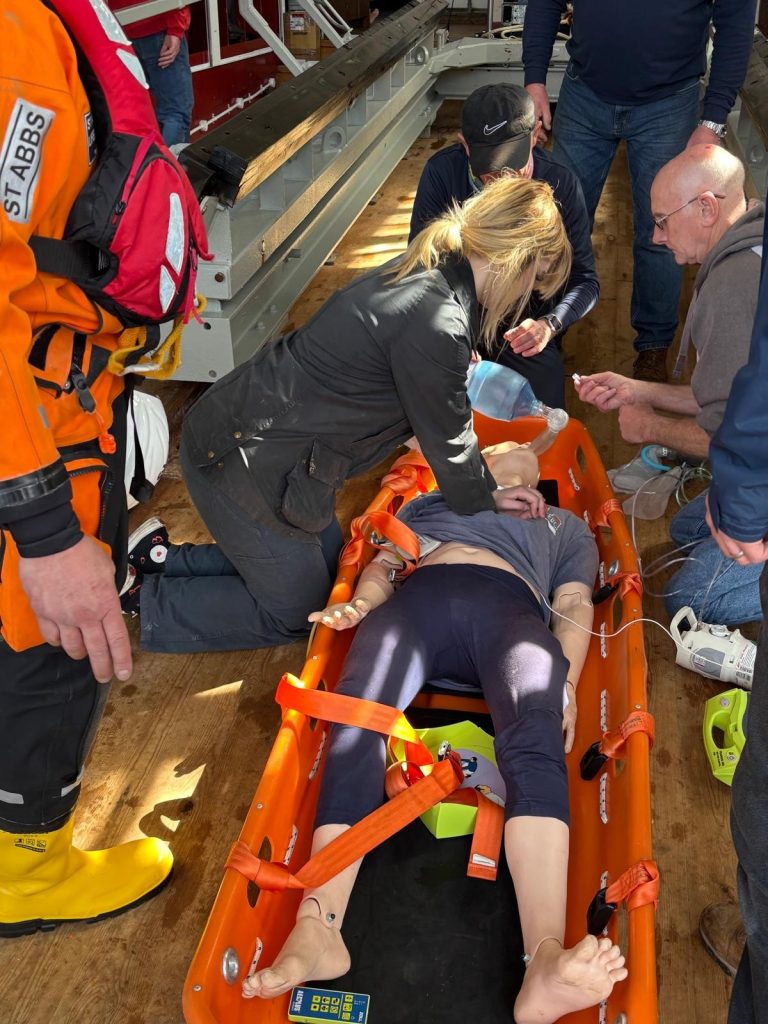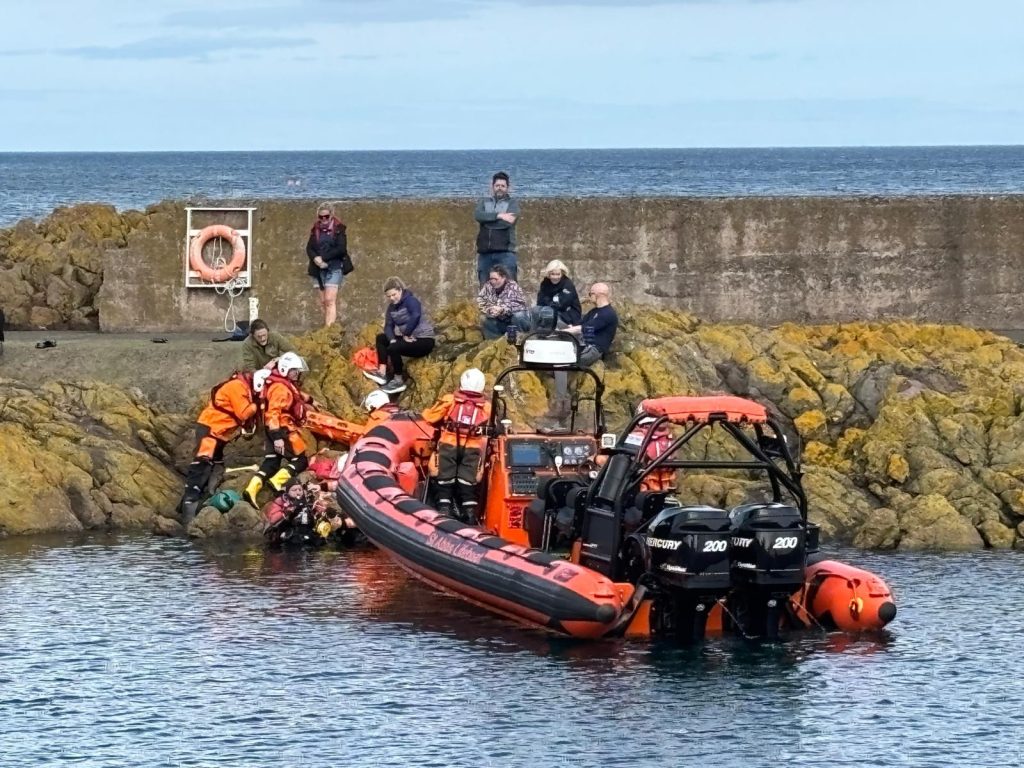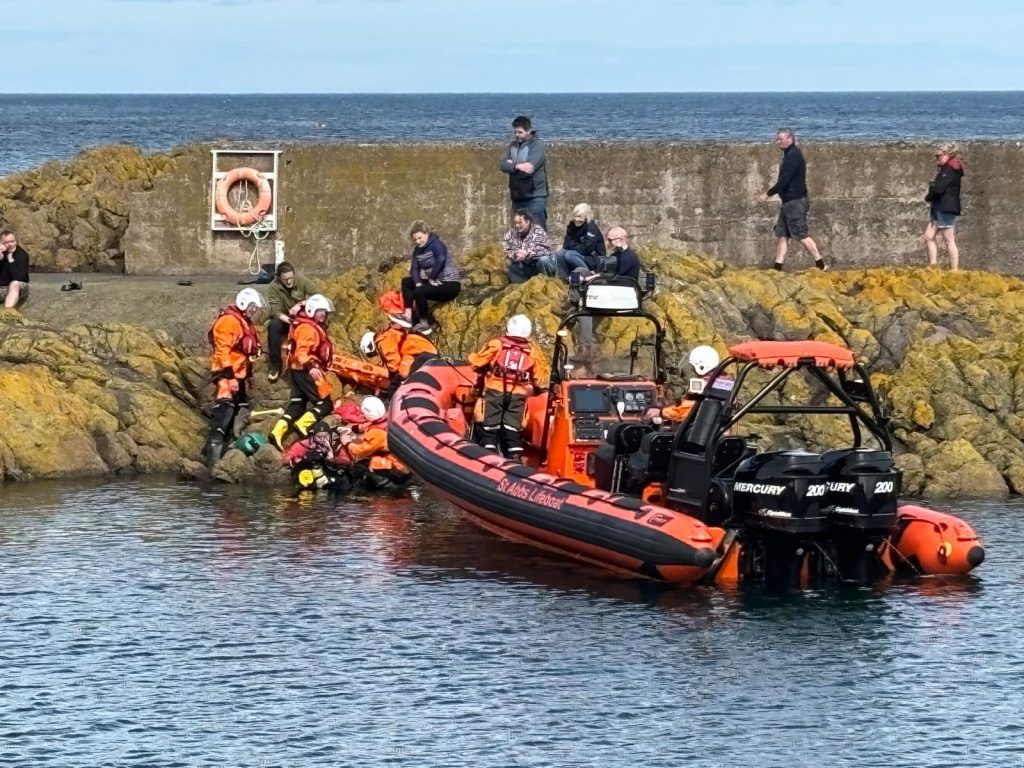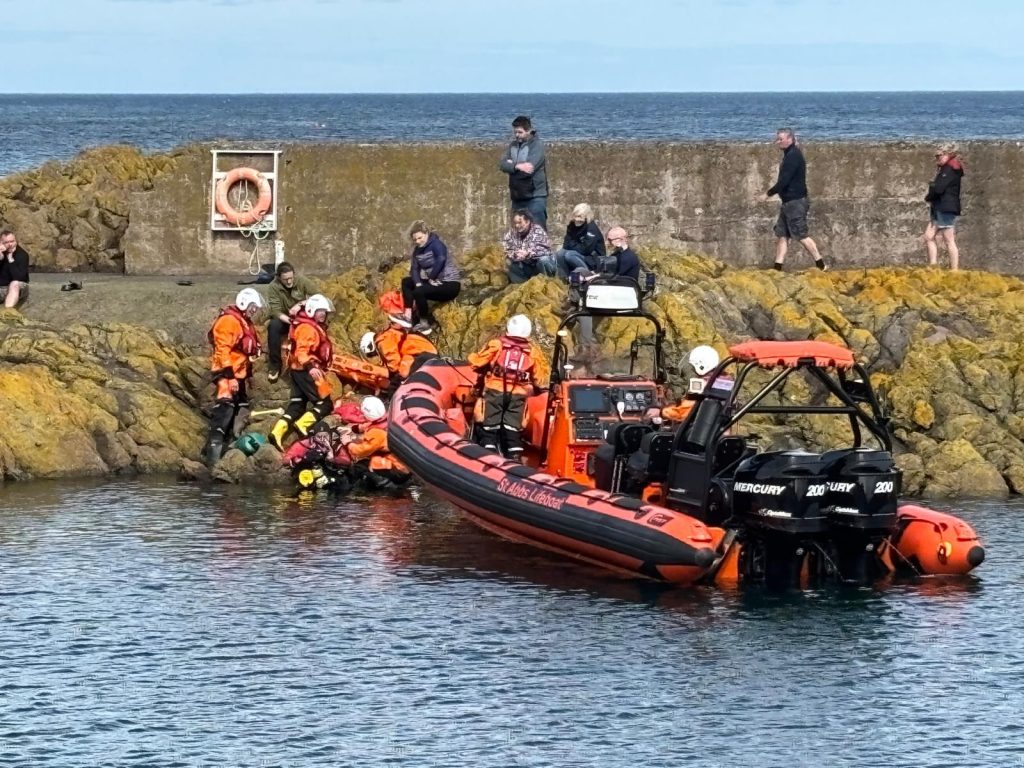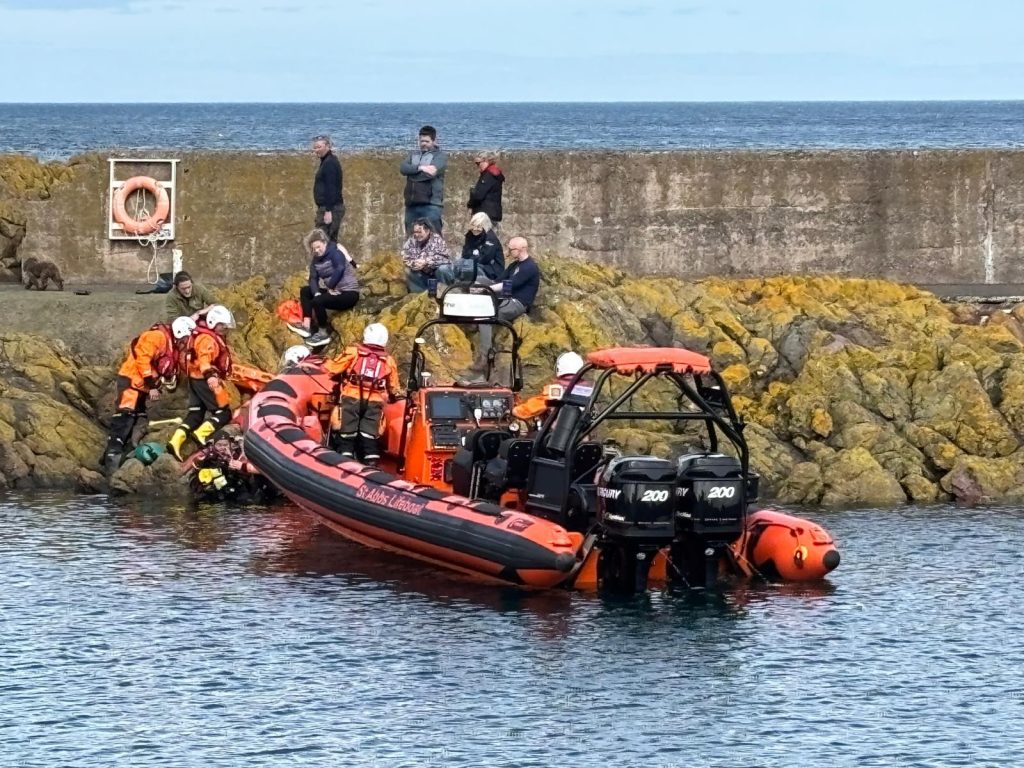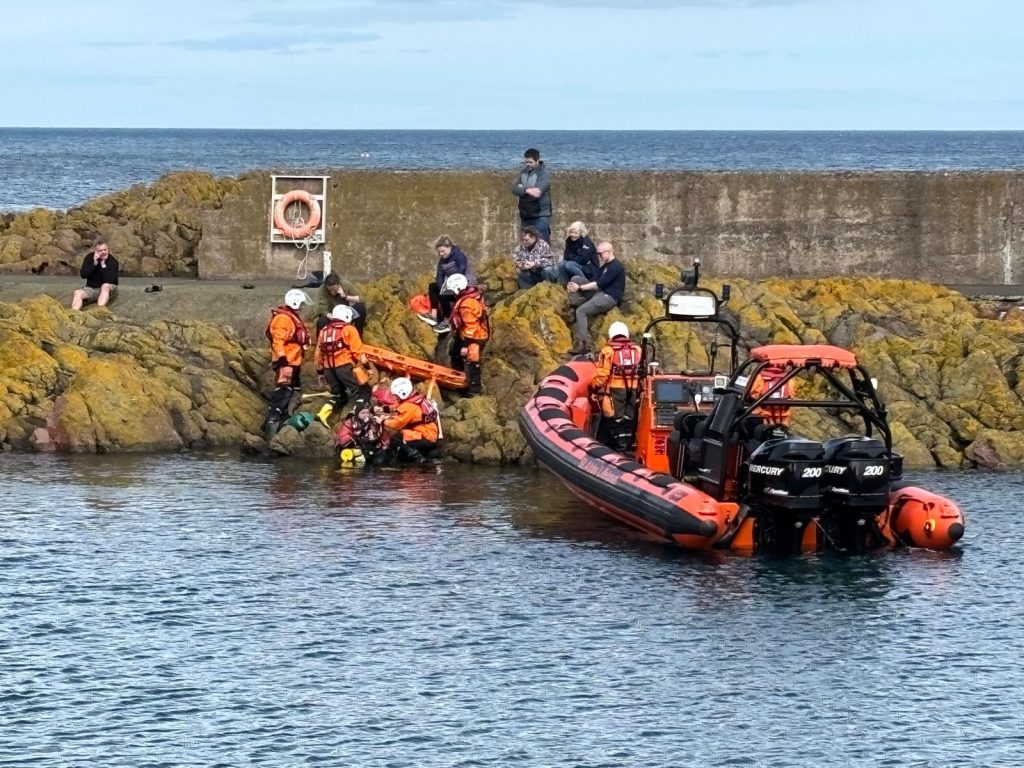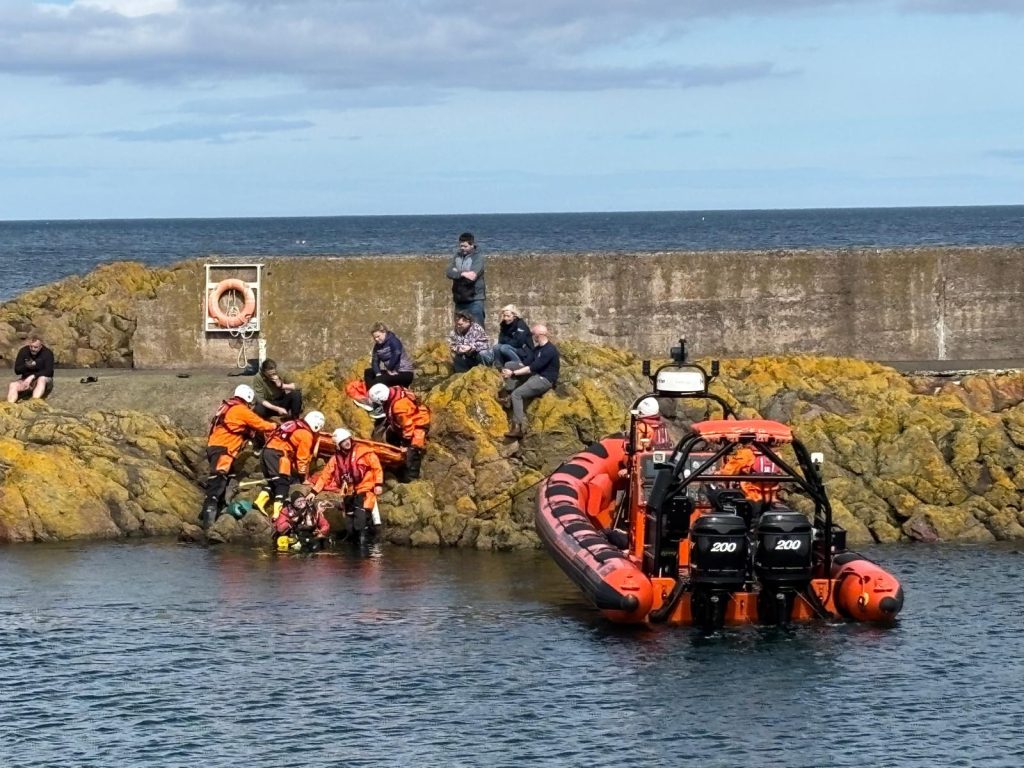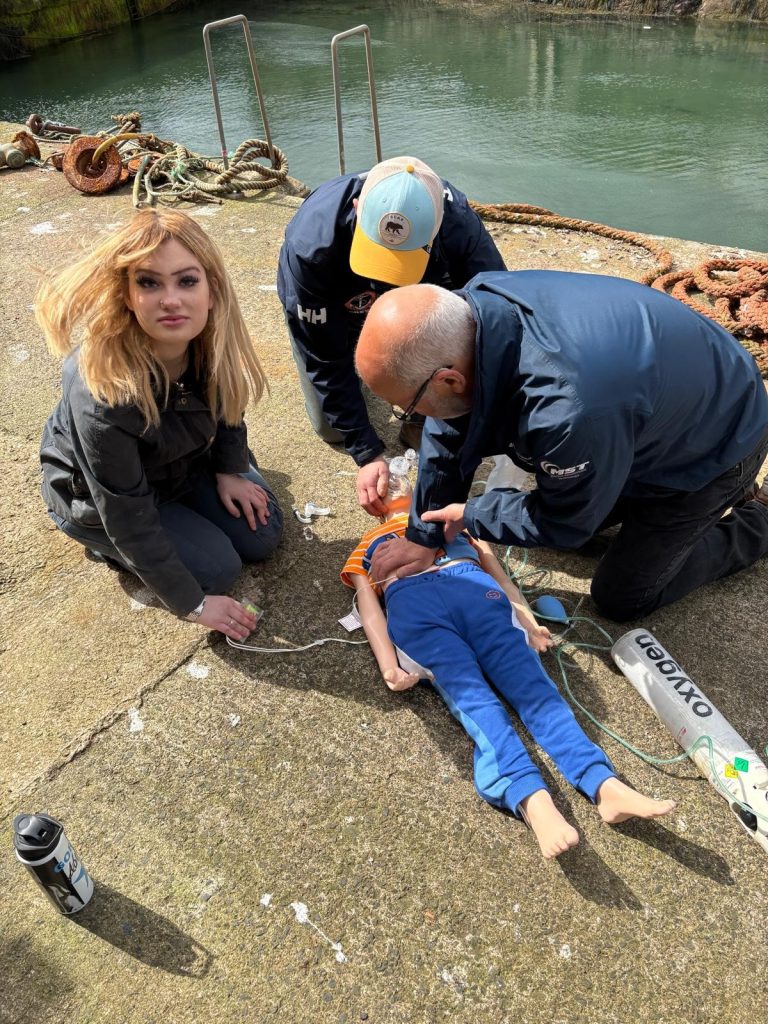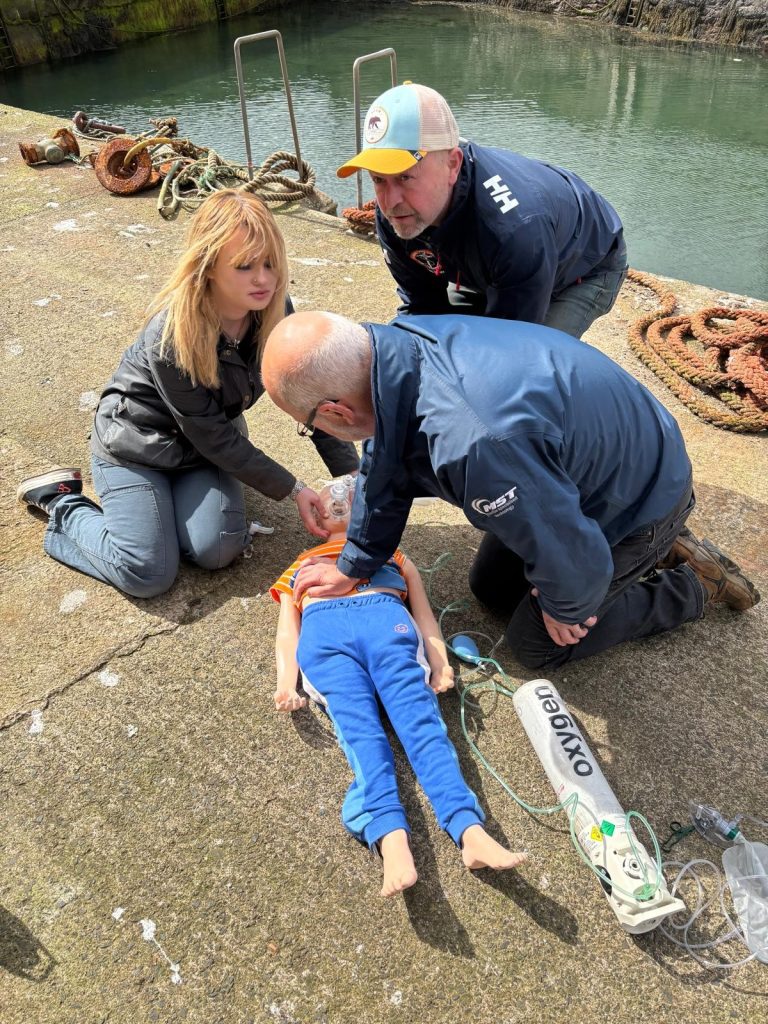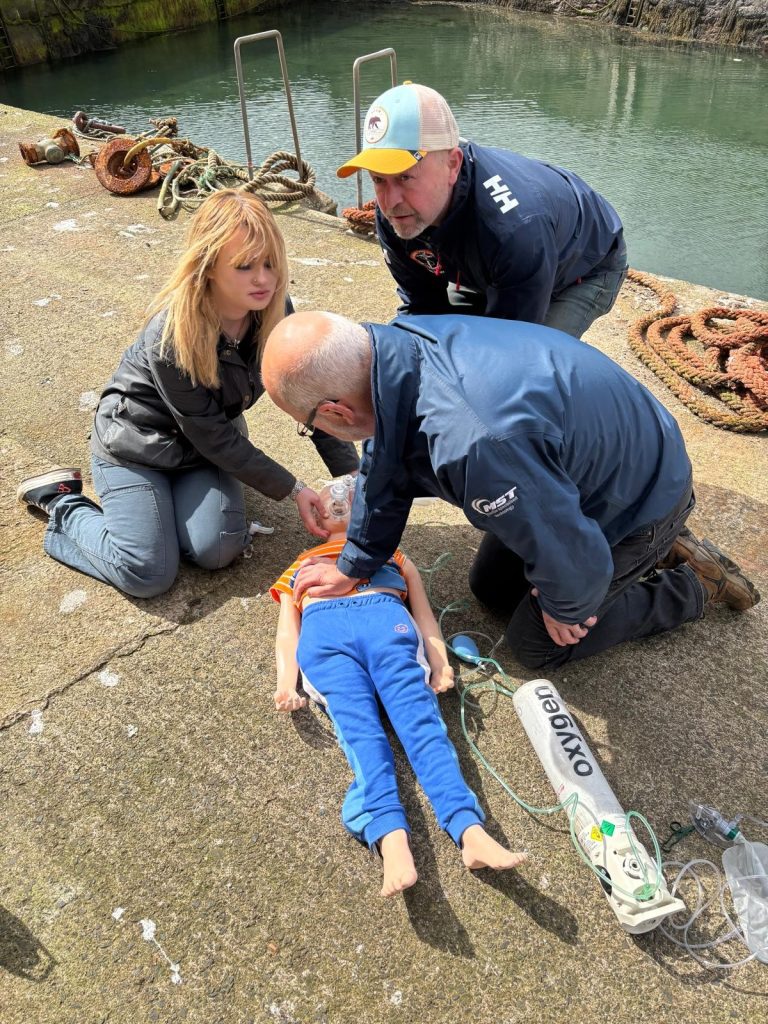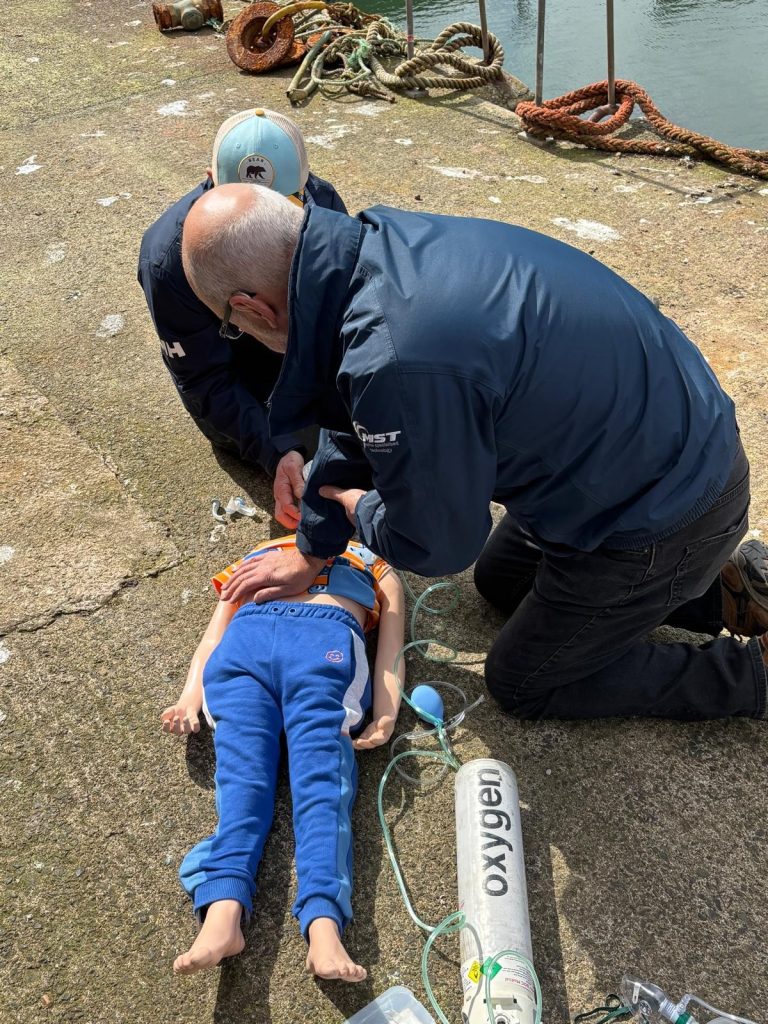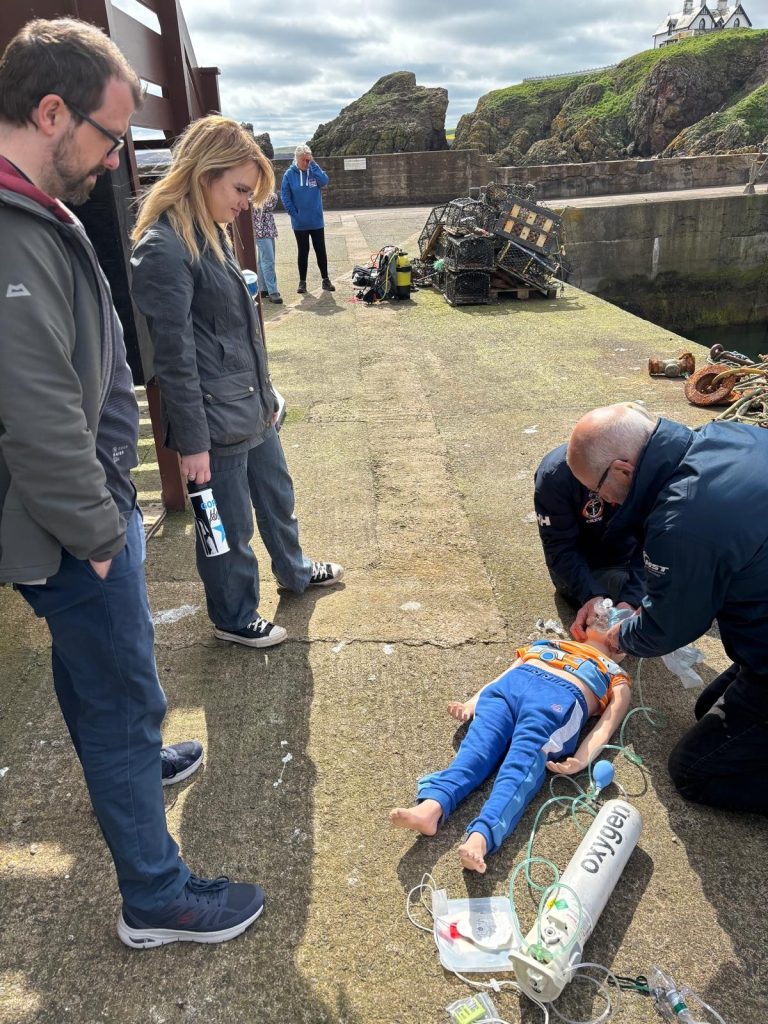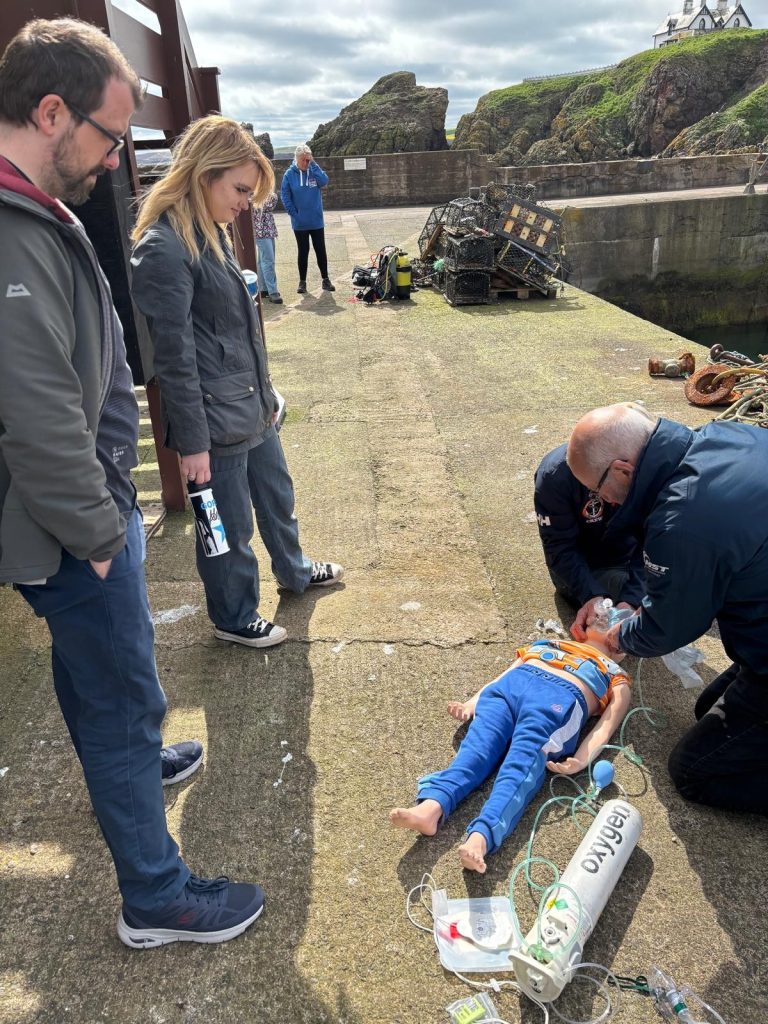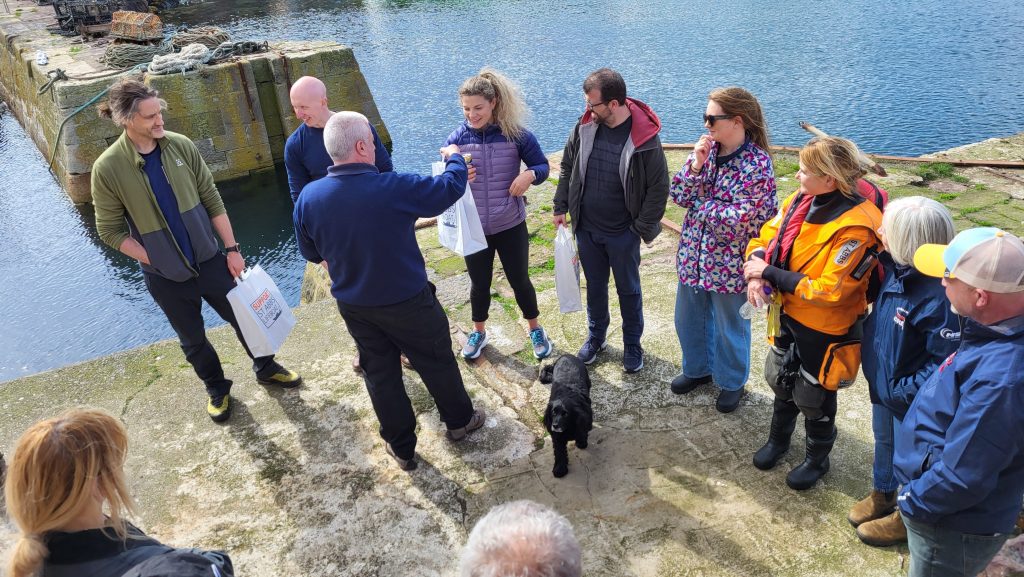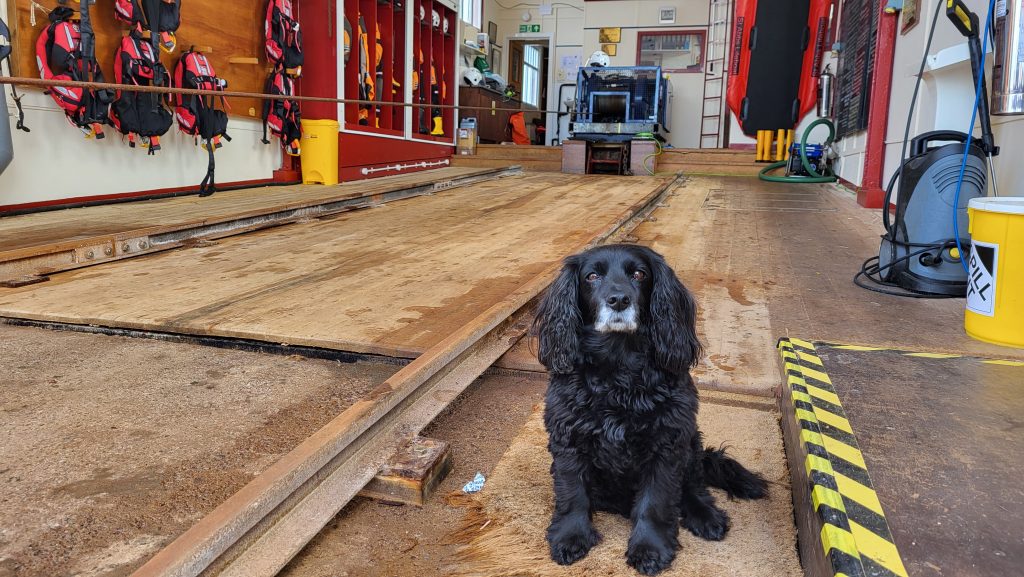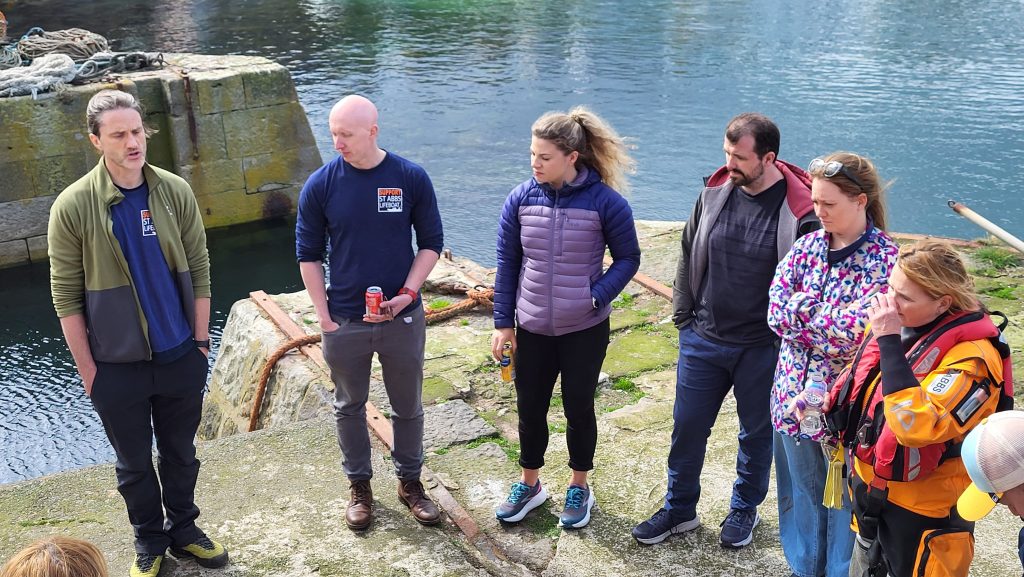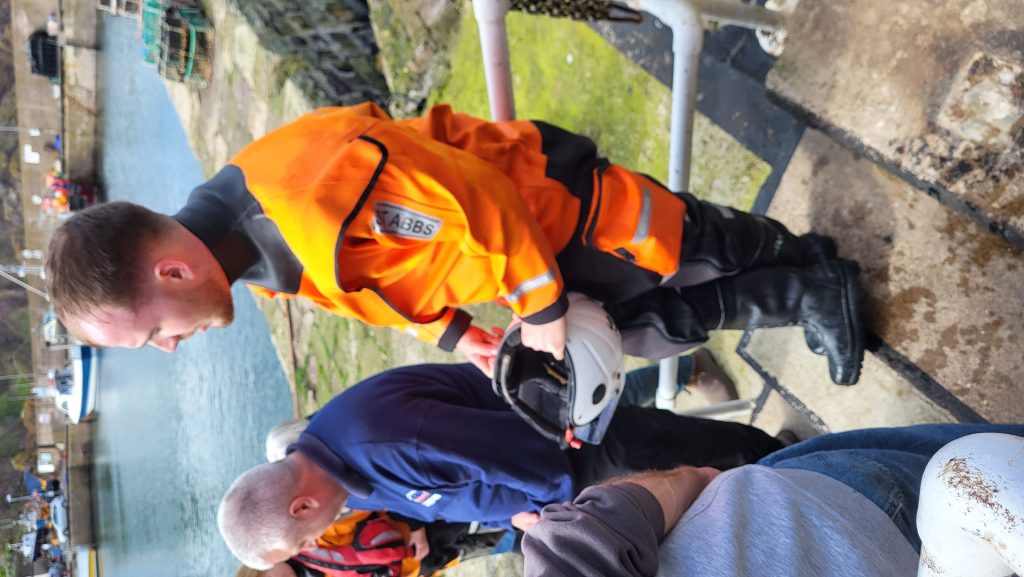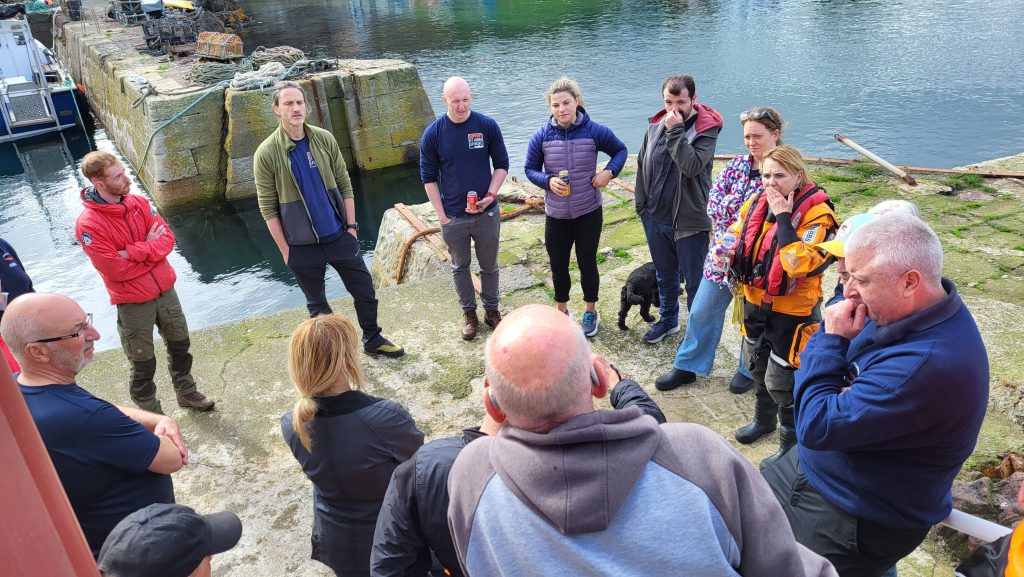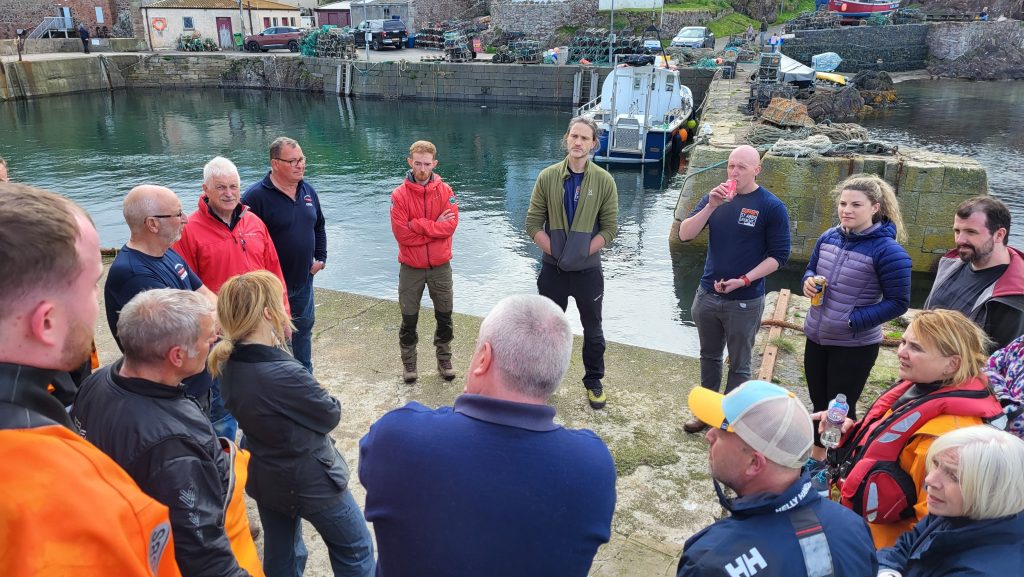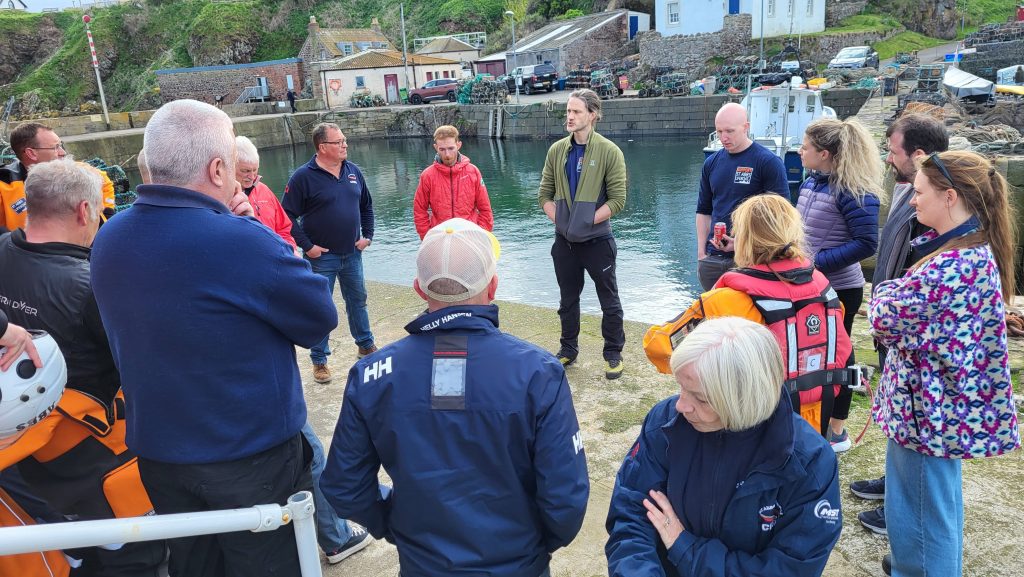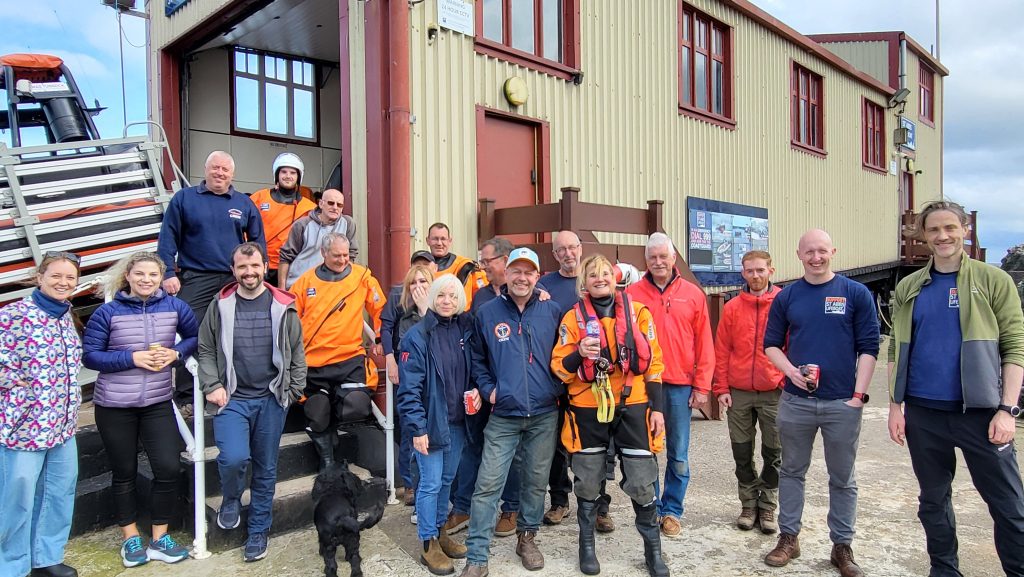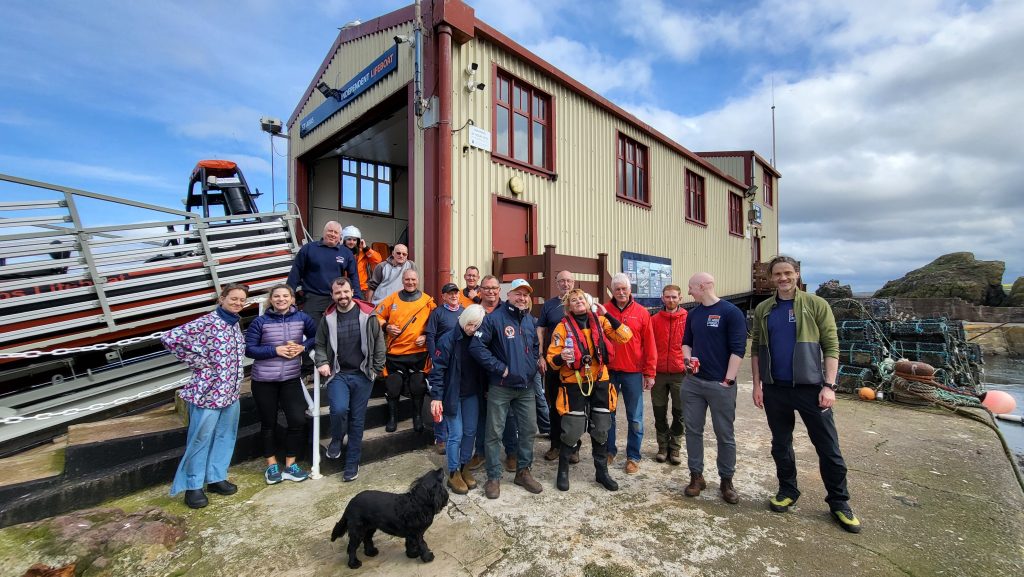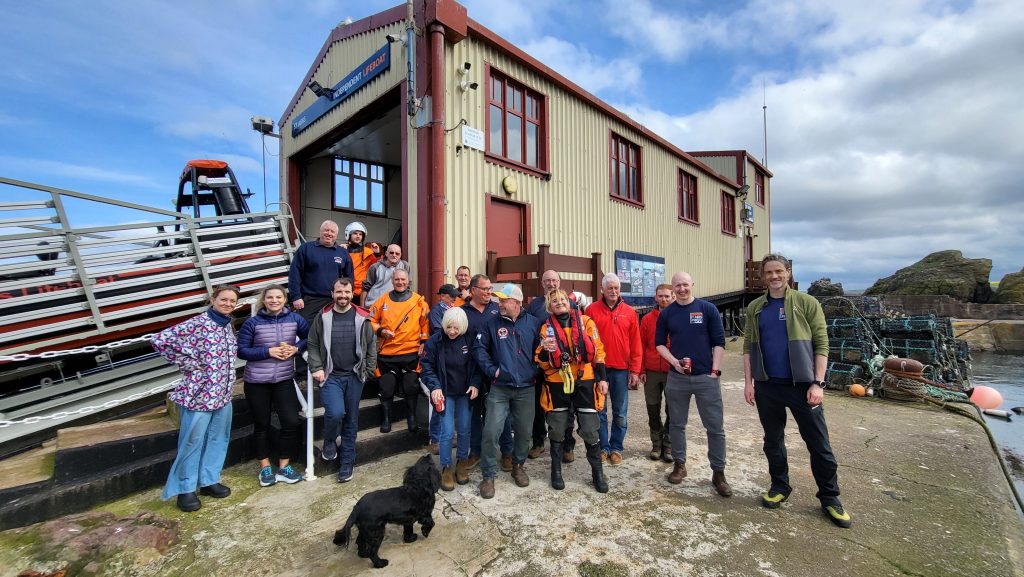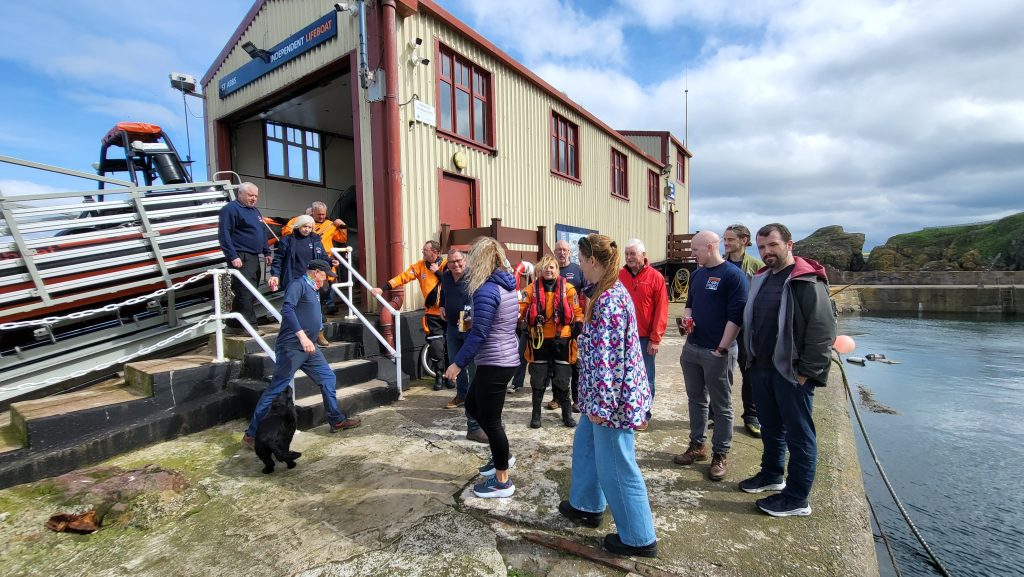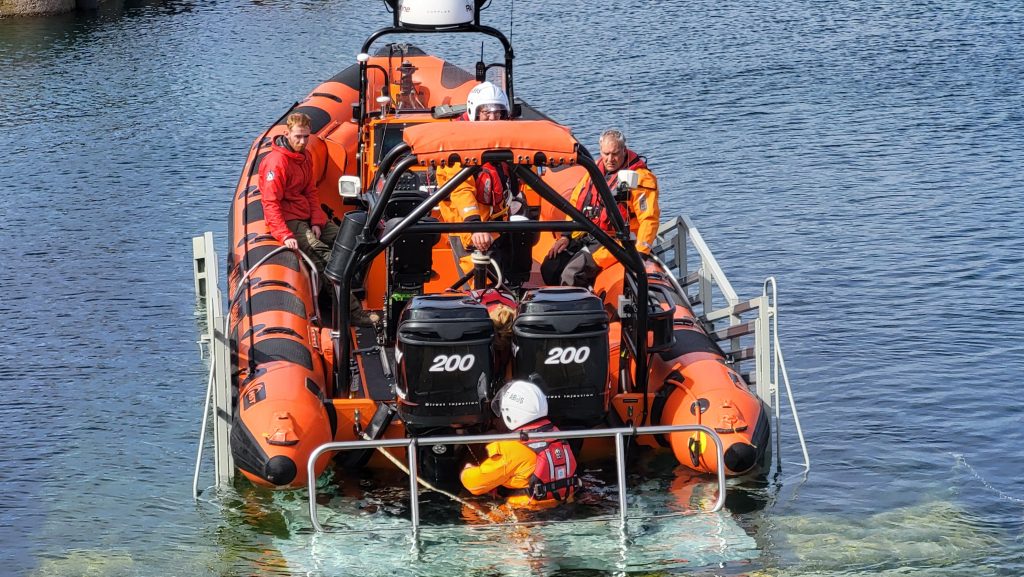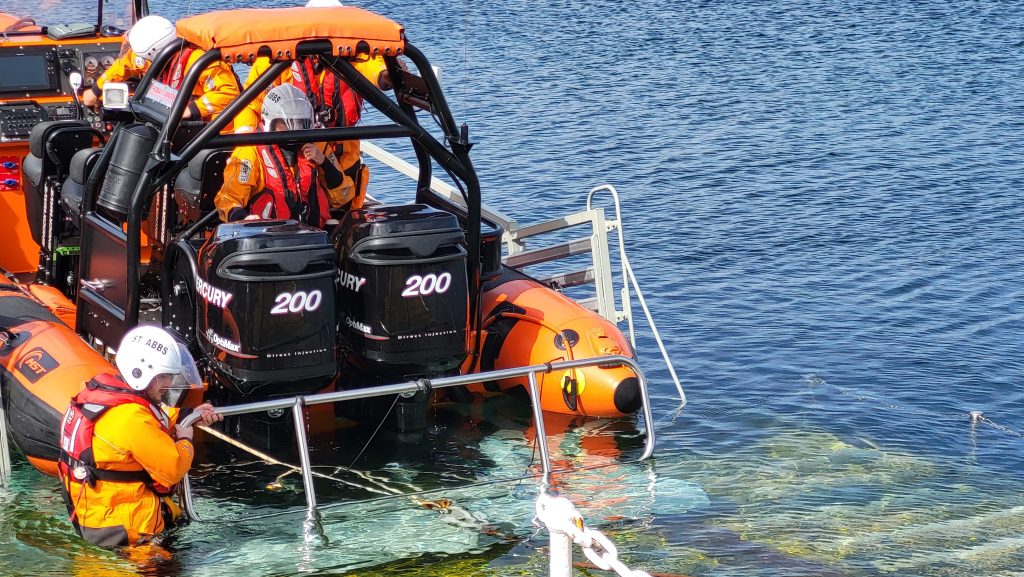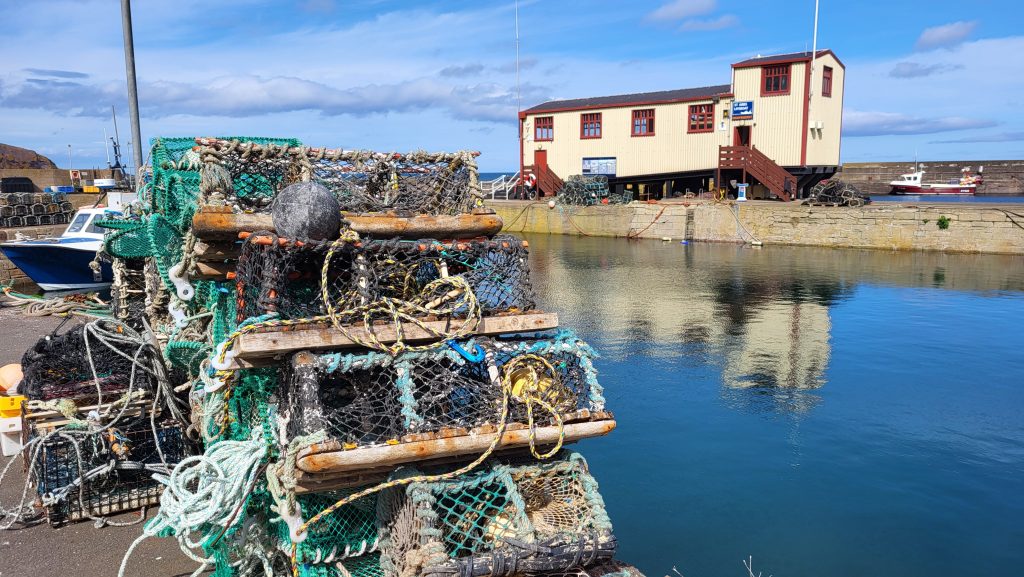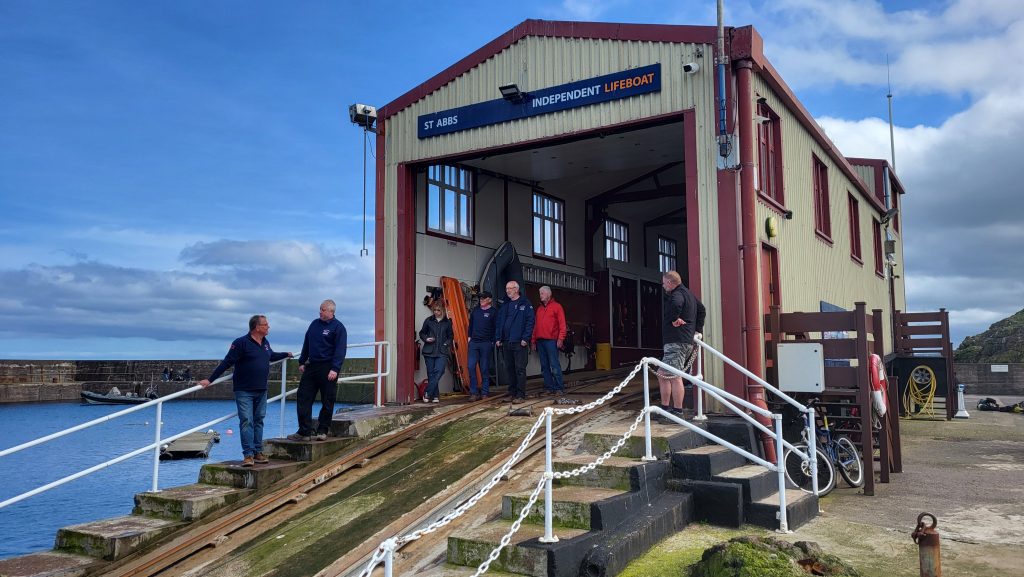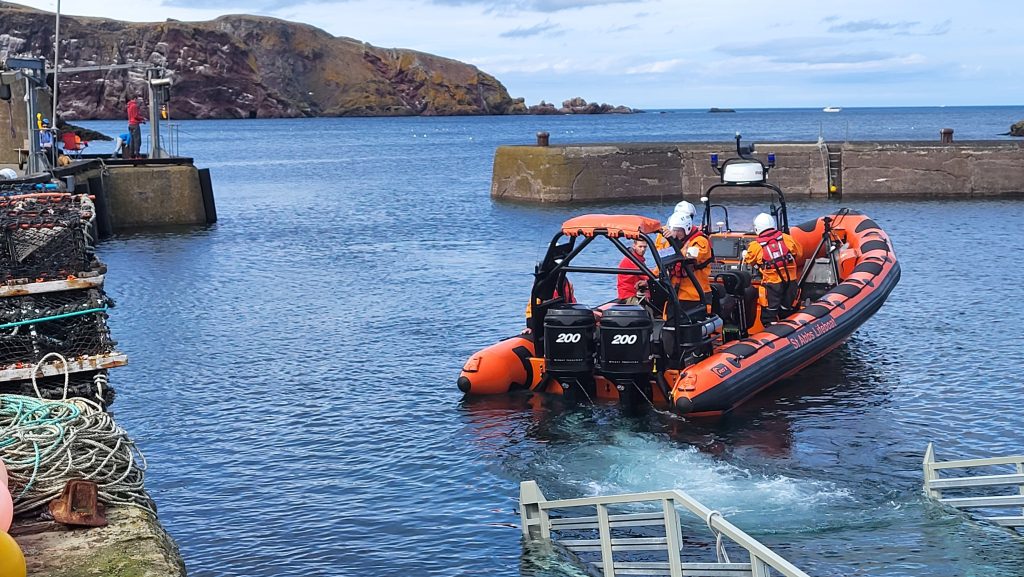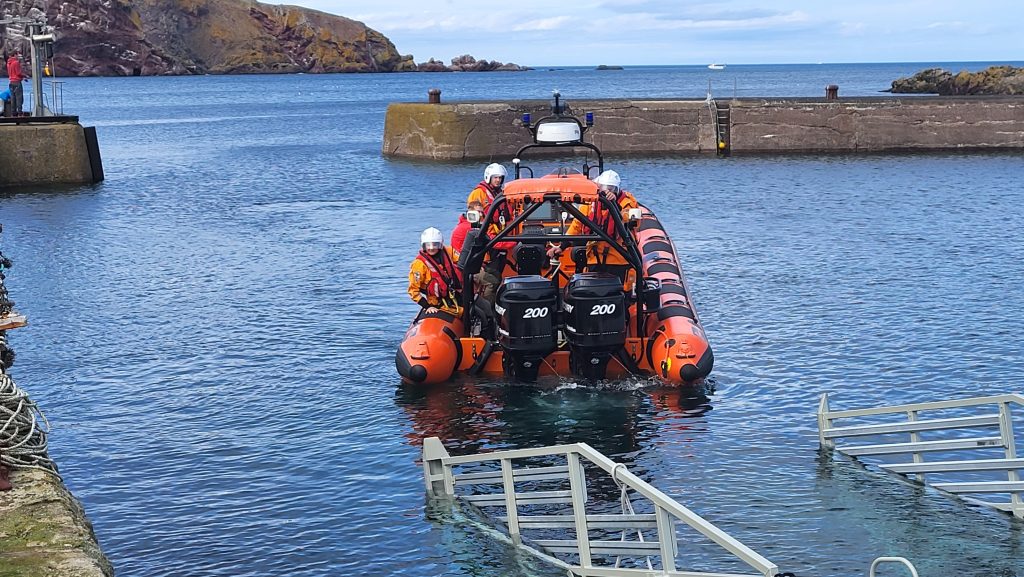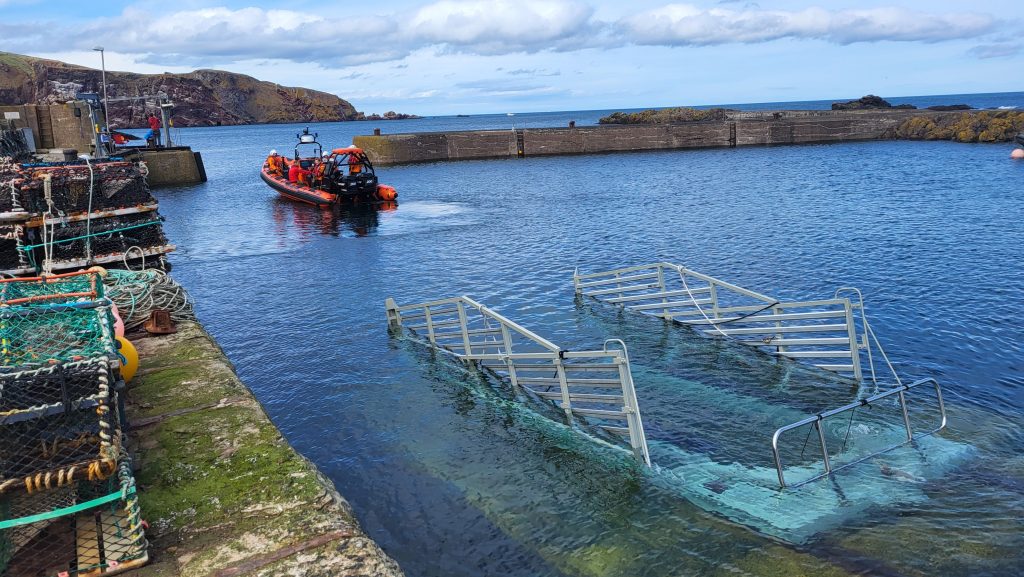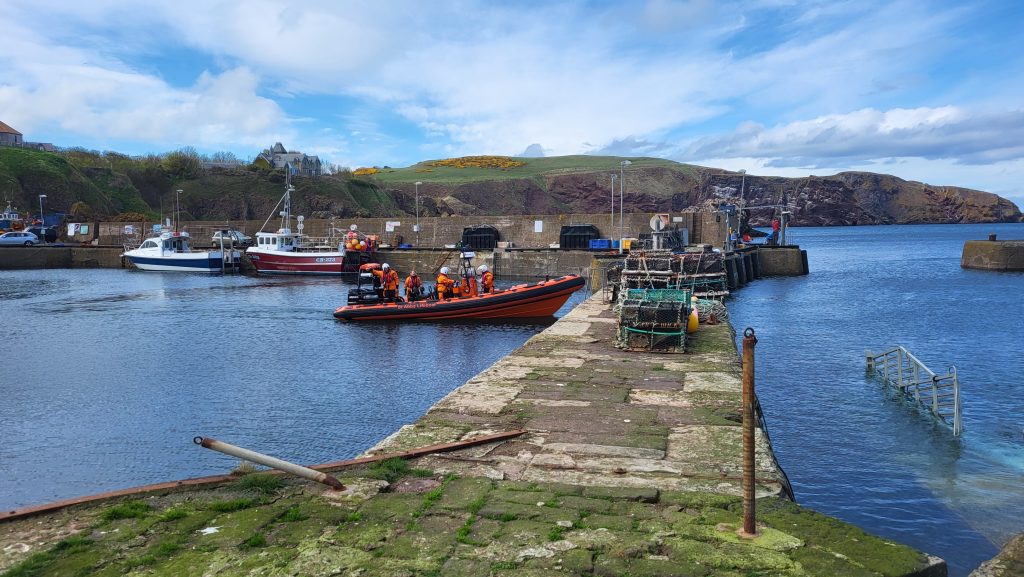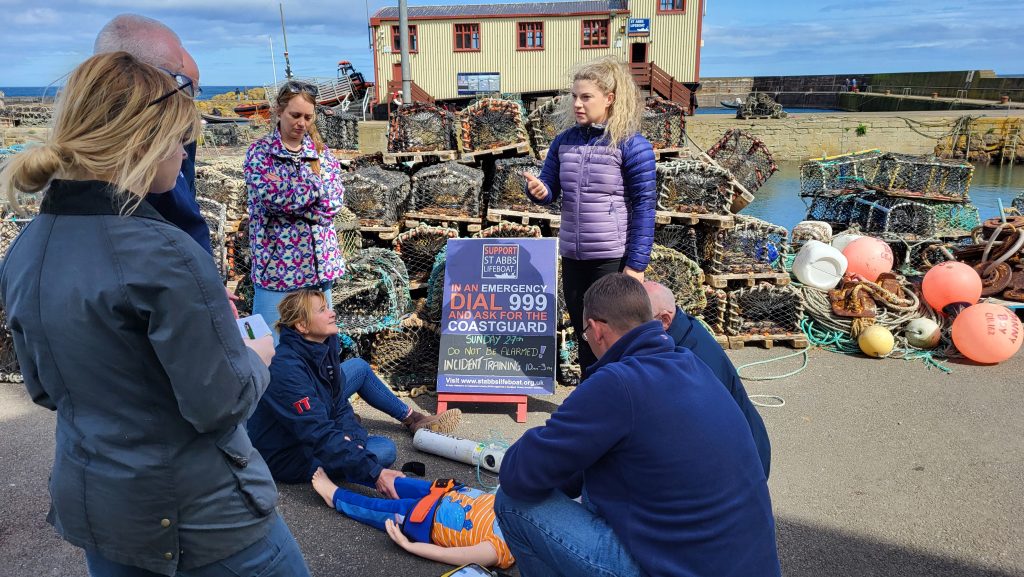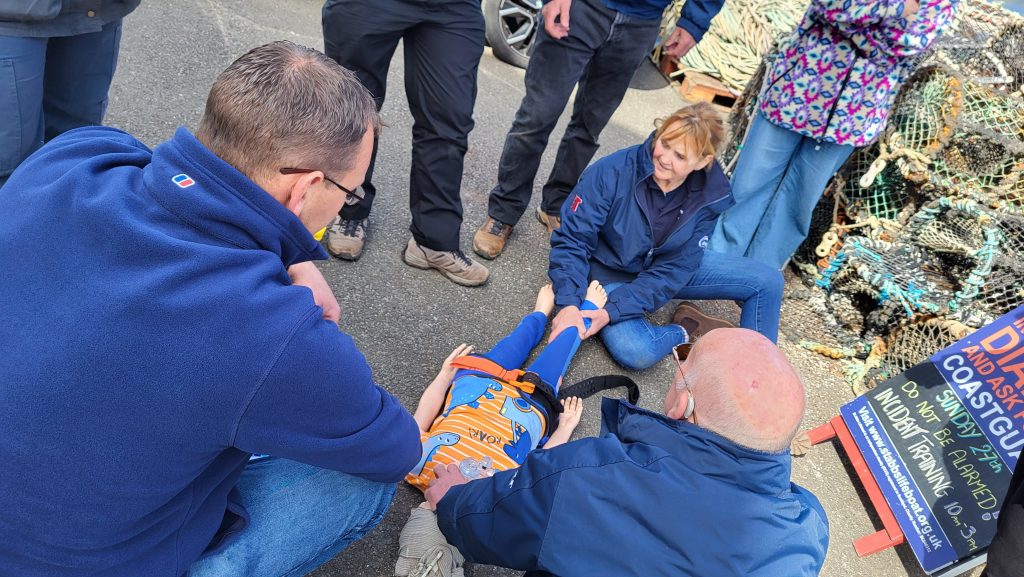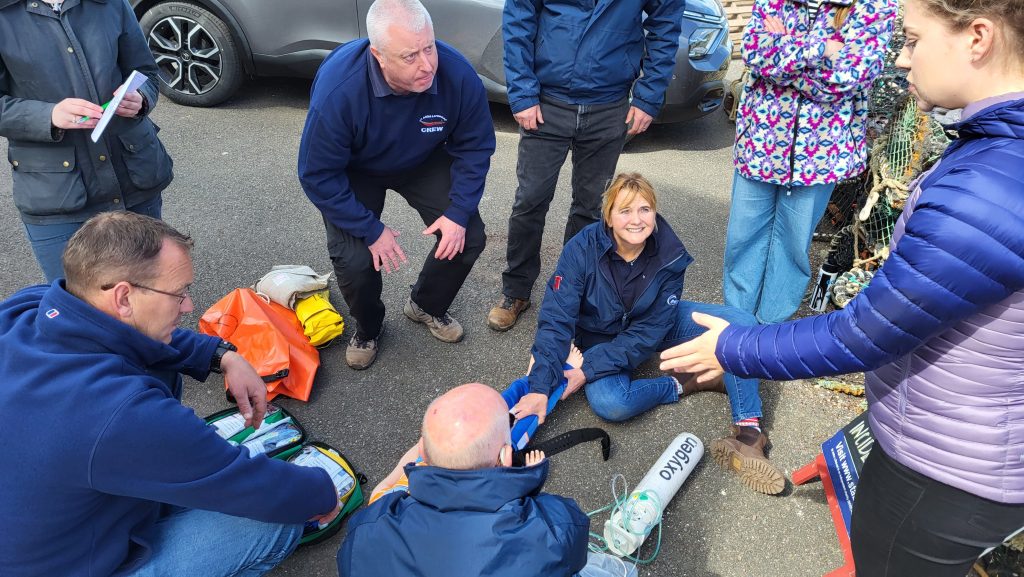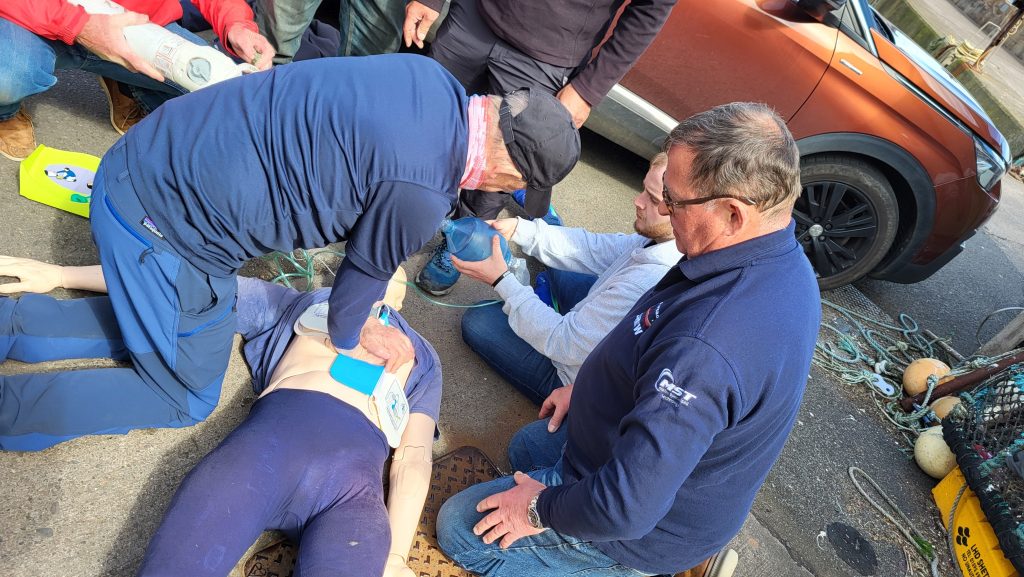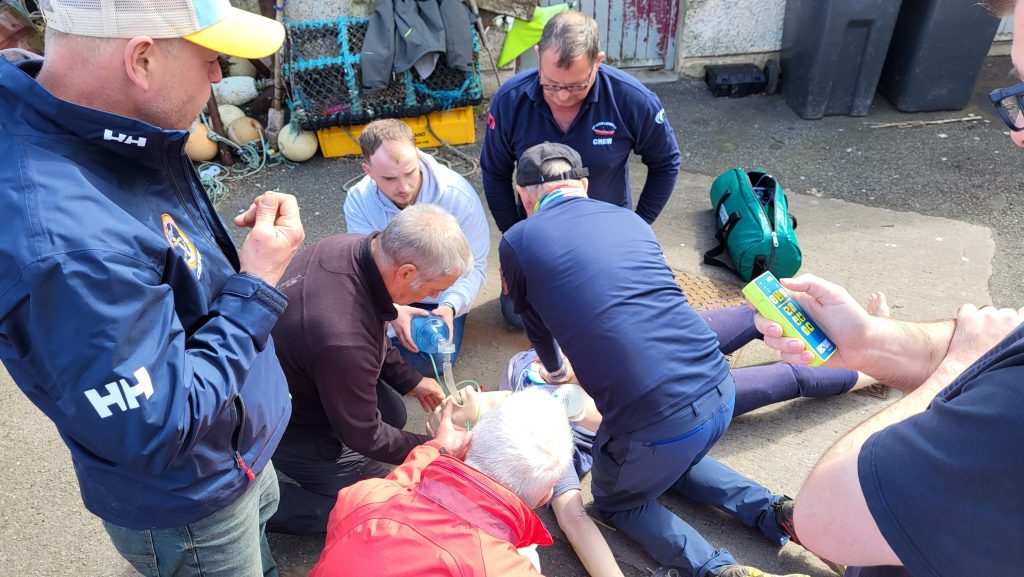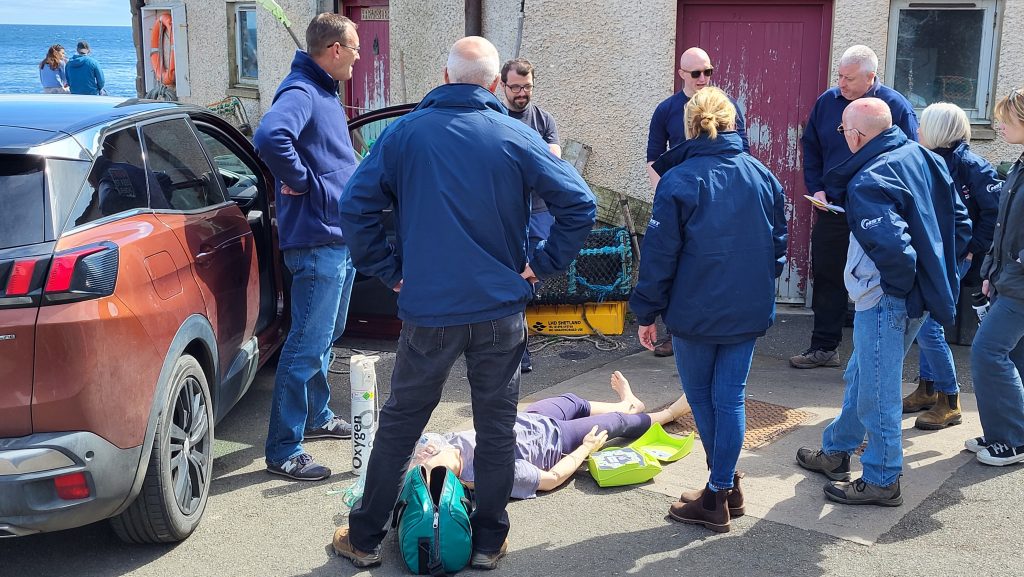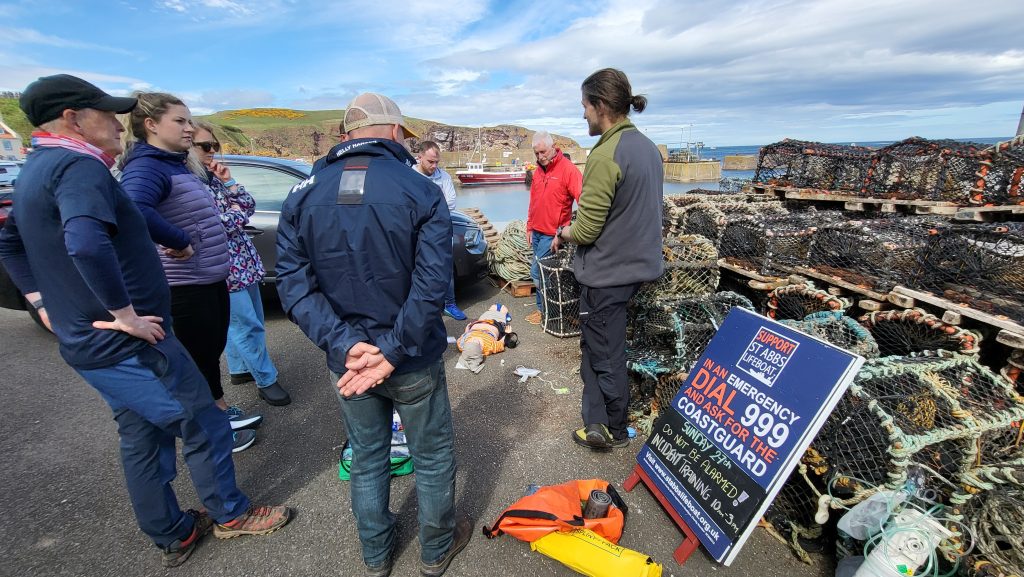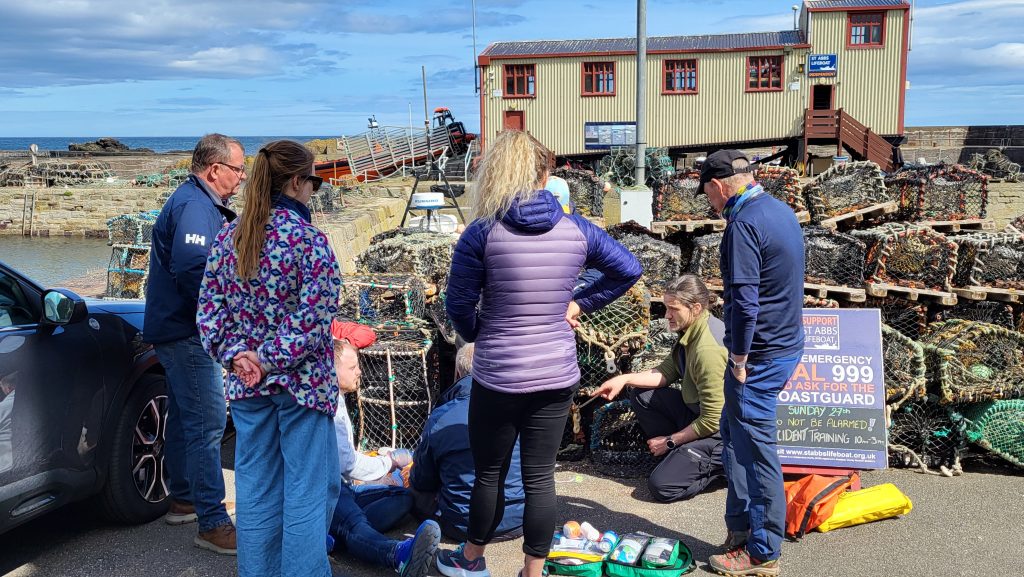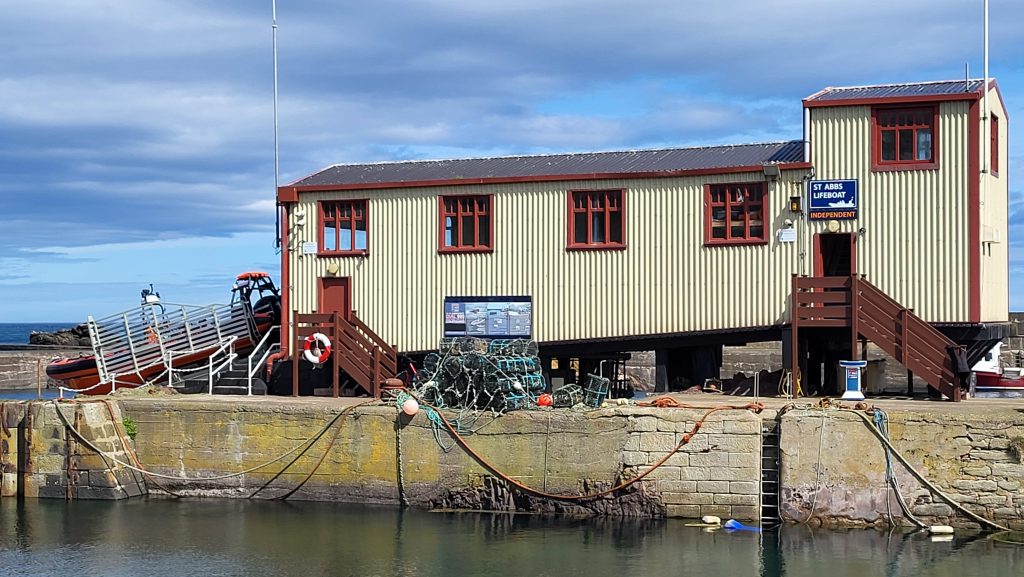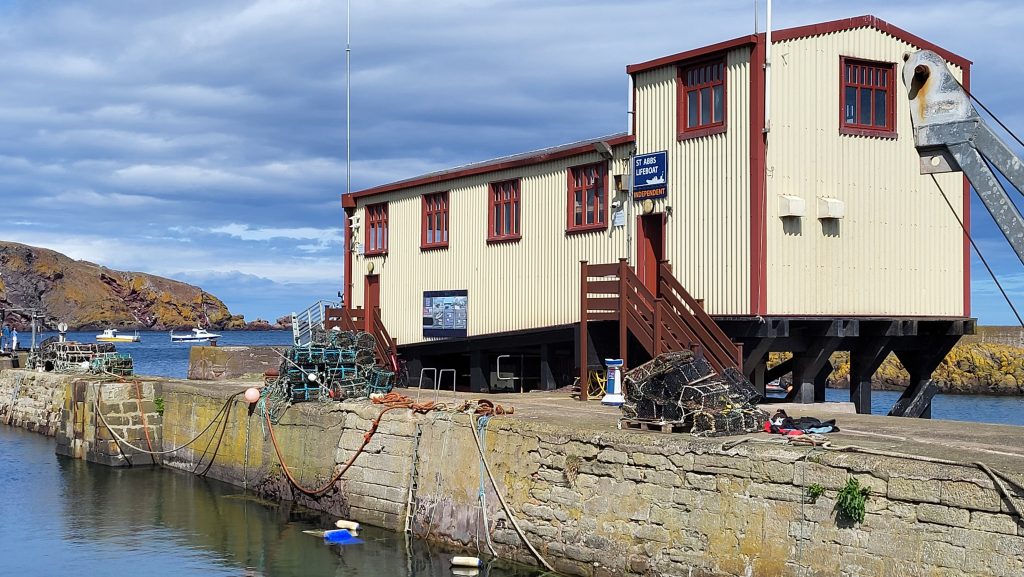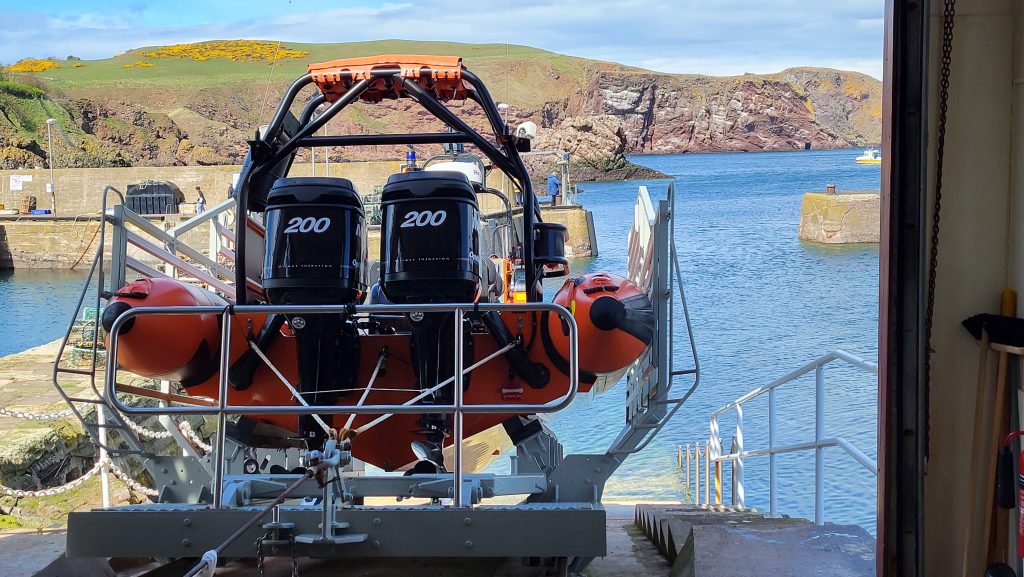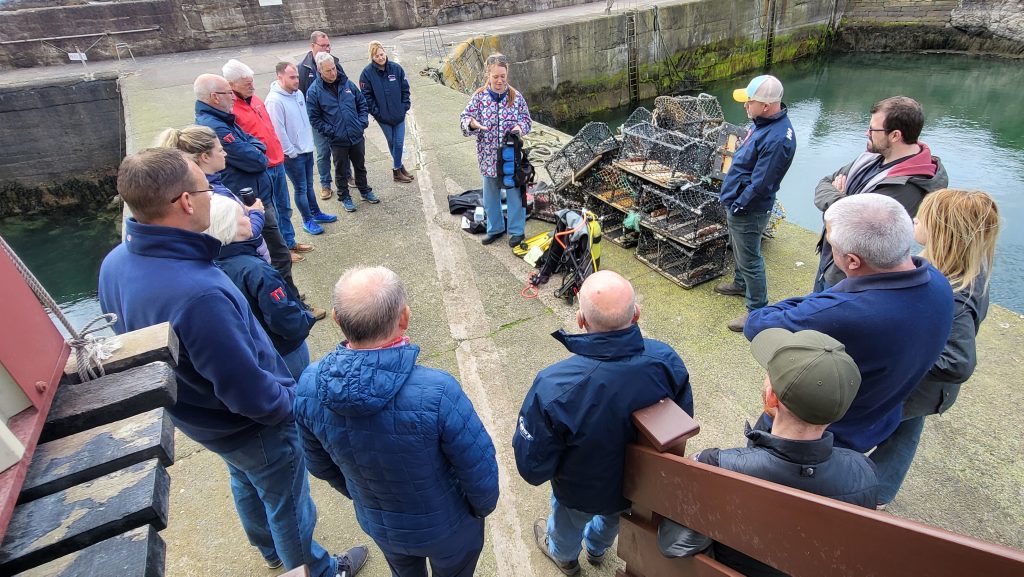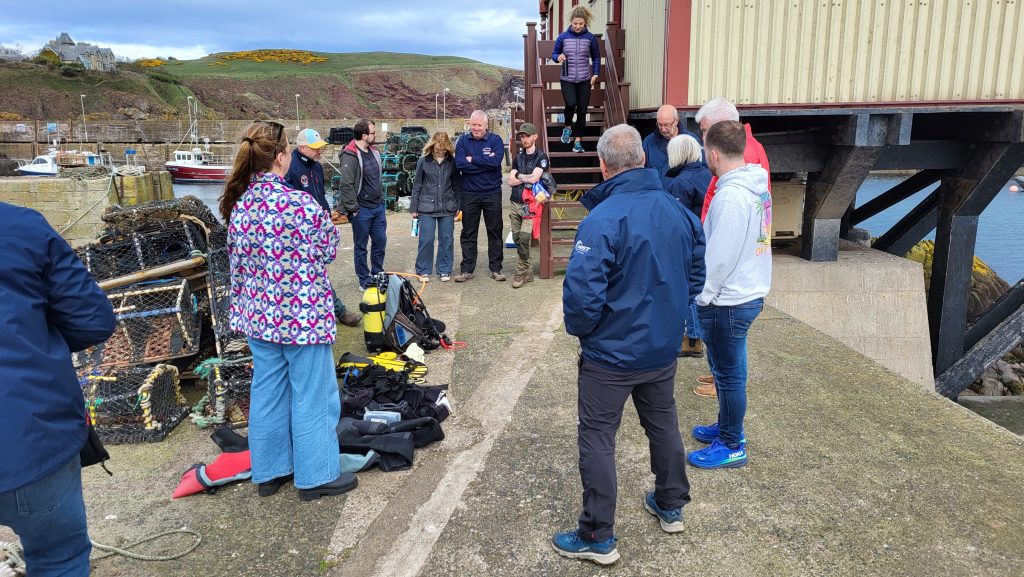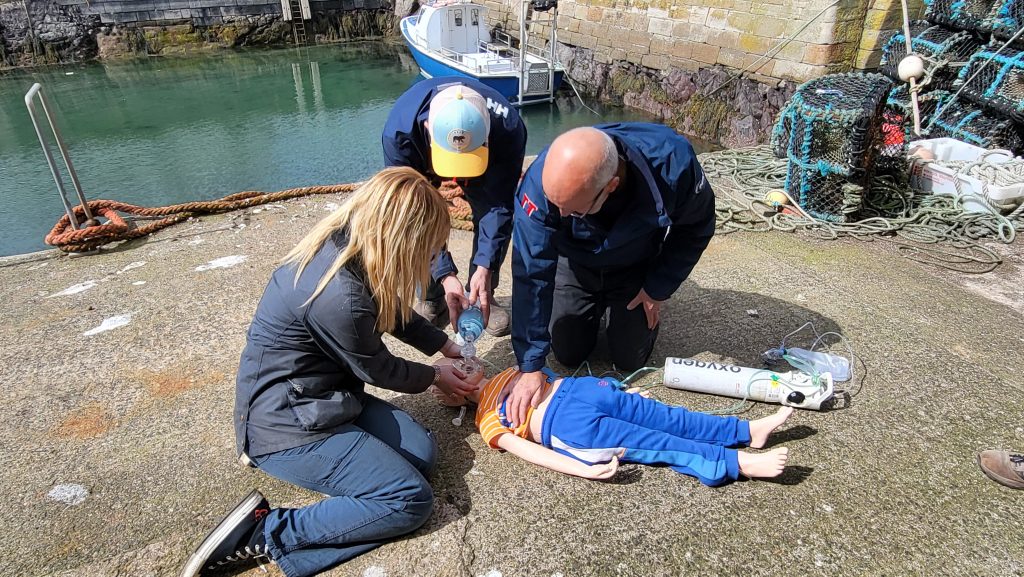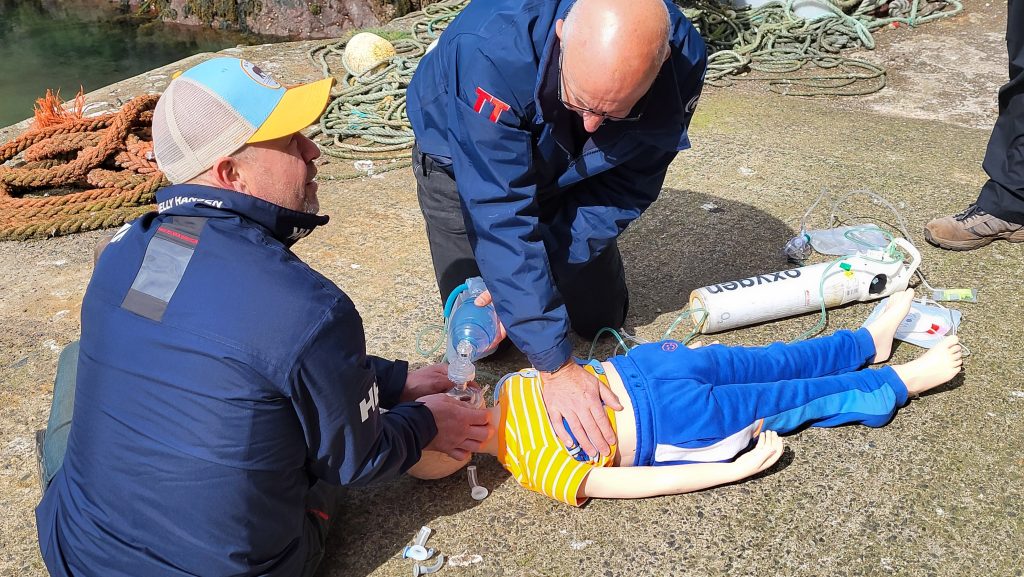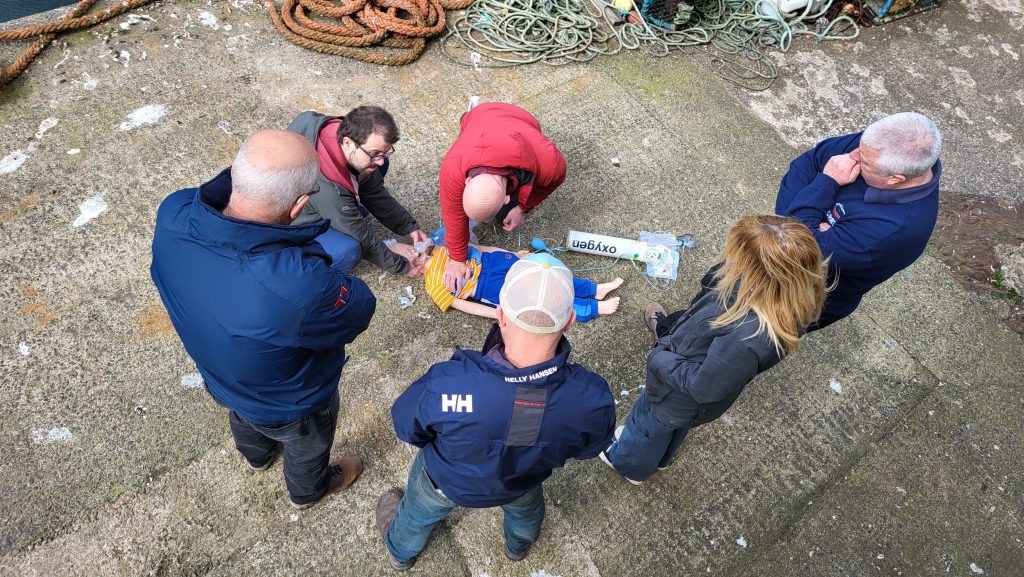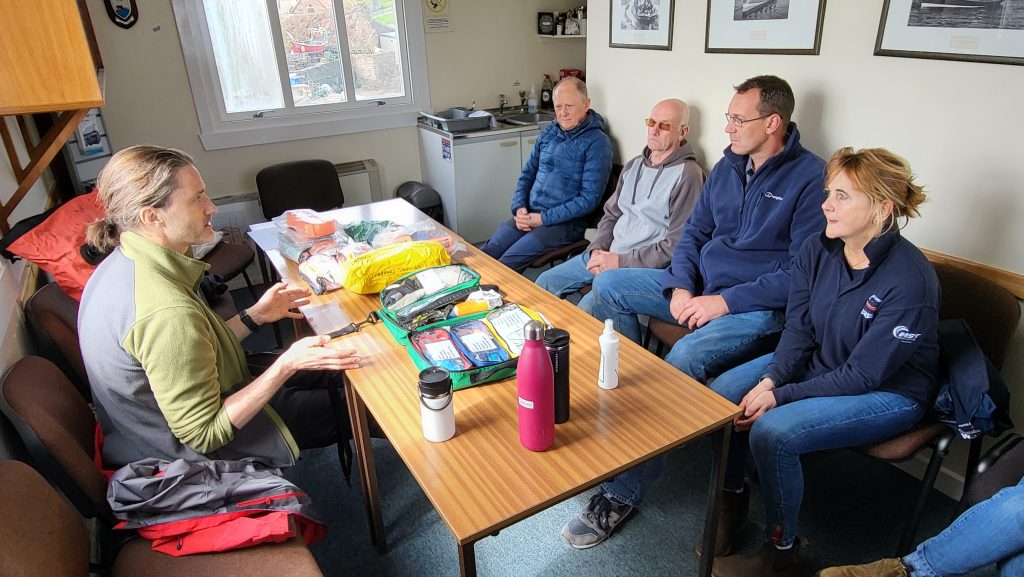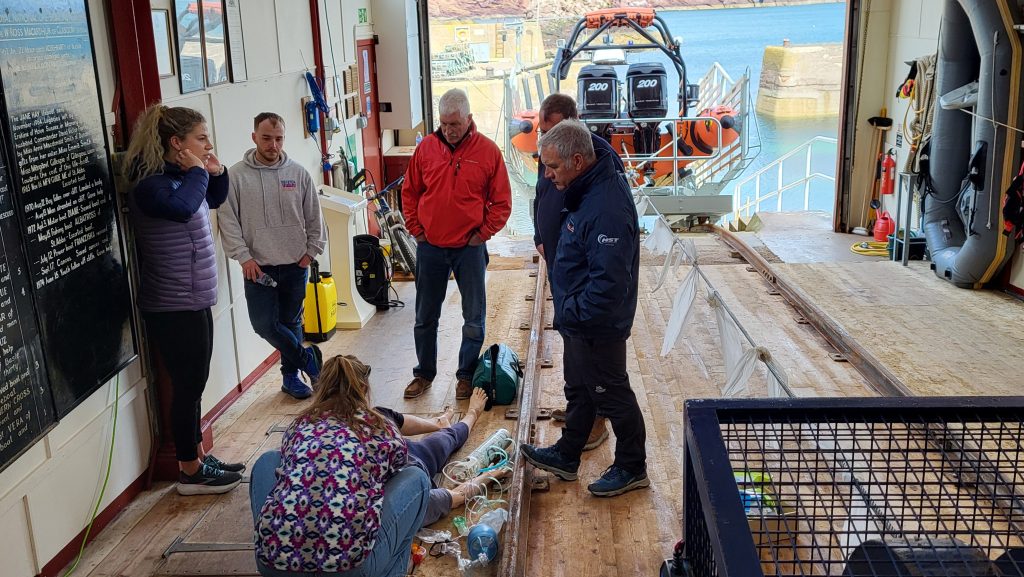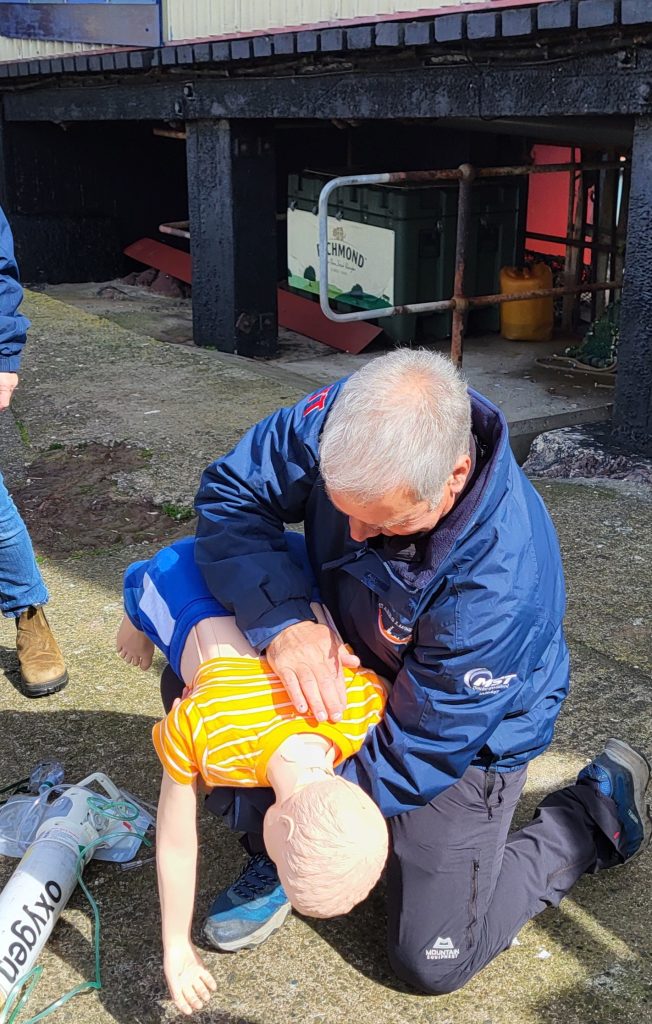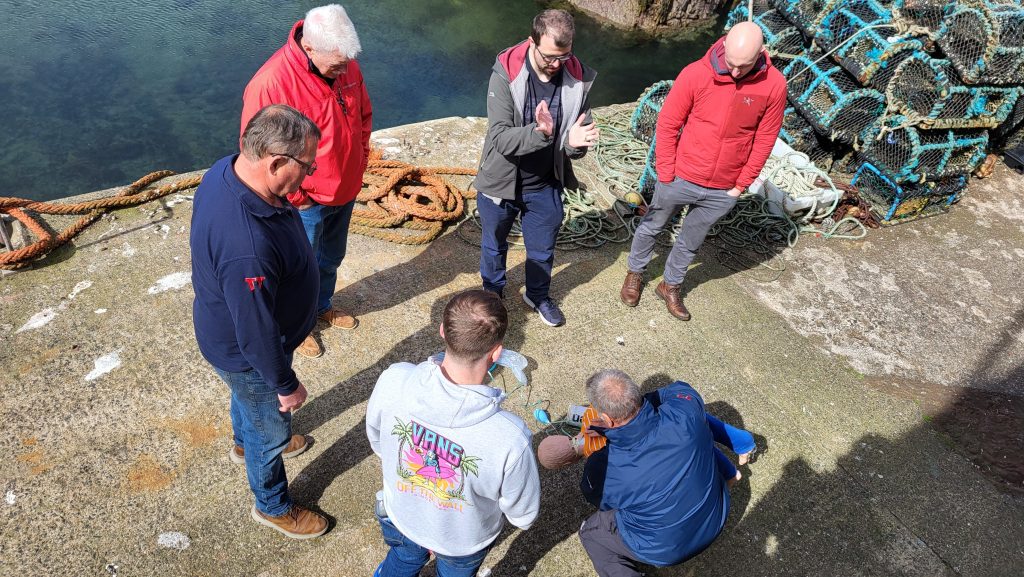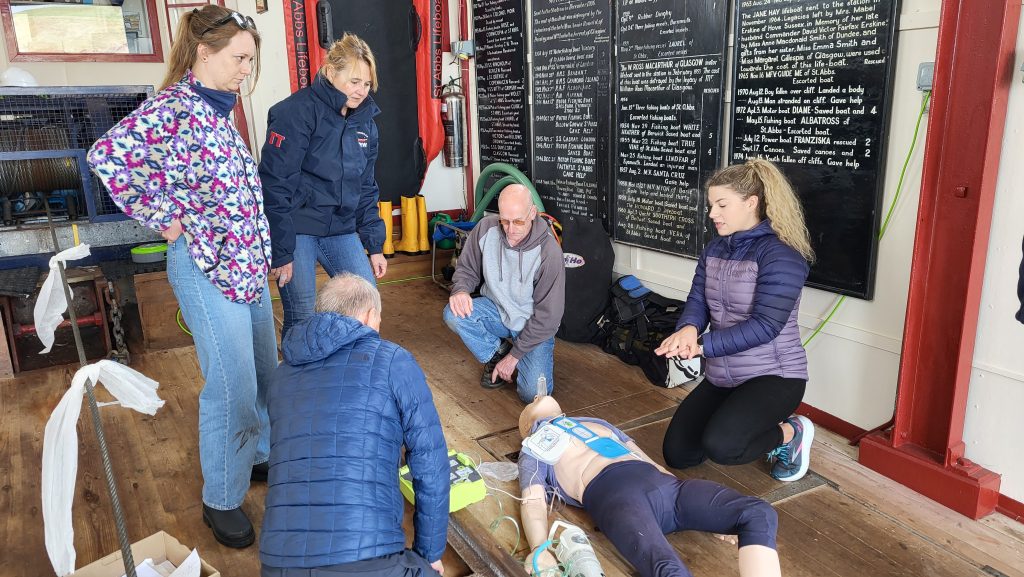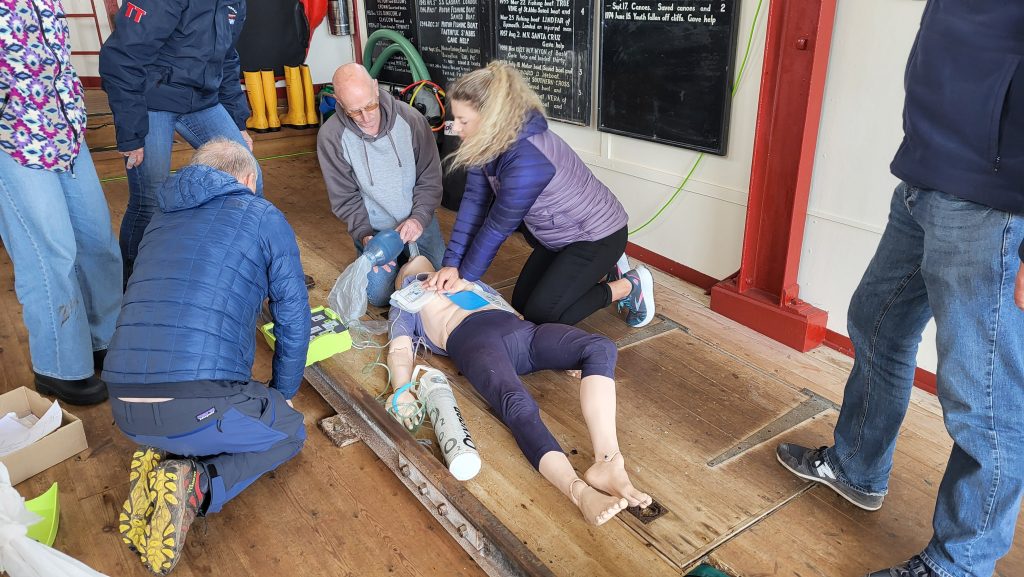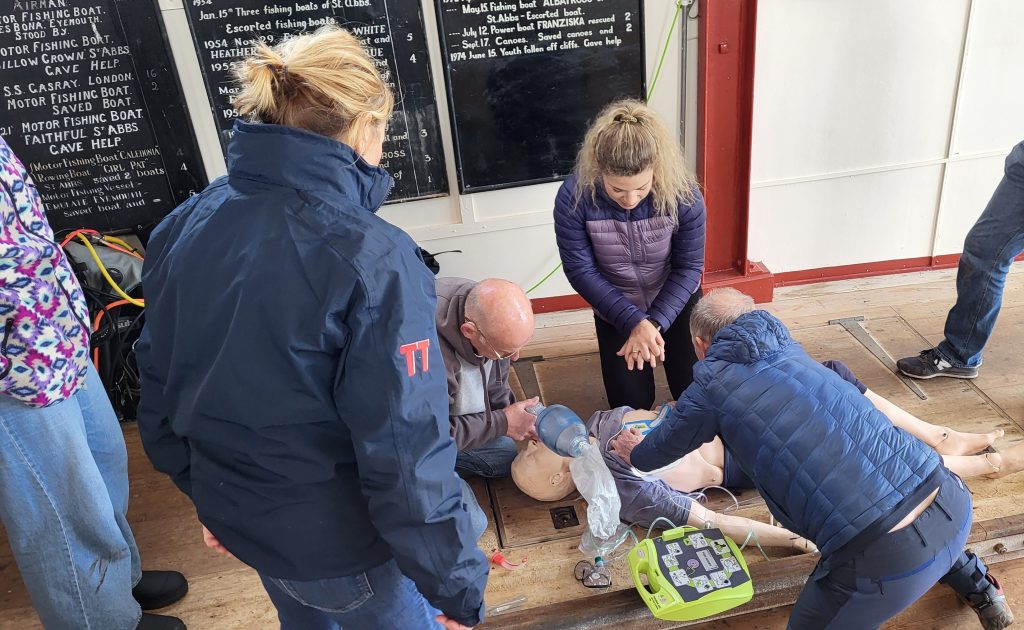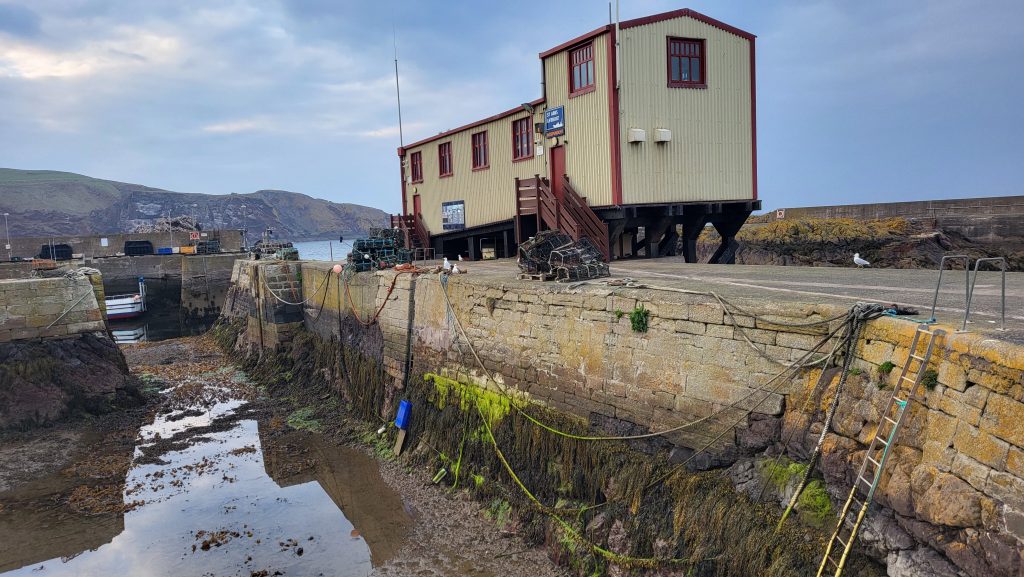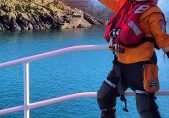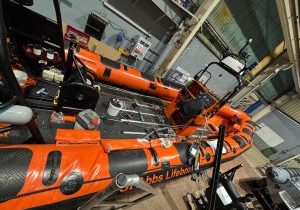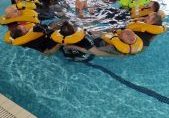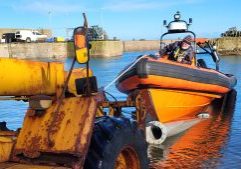
Today we carried out some major incident training, both in the harbour and on the Lifeboat. Crew practiced life support procedures for adults and children in various scenarios including diver rapid ascent and deterioration, child choking and resuscitation, drowning, cardiac arrest and general accident trauma. Every crew member on board St Abbs Lifeboat is trained in first aid and holds a current certificate. However this sort of training takes our crew to the next level in terms of dealing with trauma and casualties on our shouts. We do this because a high proportion of our shouts are medically related – be they cliff falls or diving incidents – and the crew are aware that, due to our rural location, they will often be in charge of a casualty for a period of time when back on shore. The crew have used their skills in their everyday life as well, assisting in accidents and emergencies in the village and further afield.
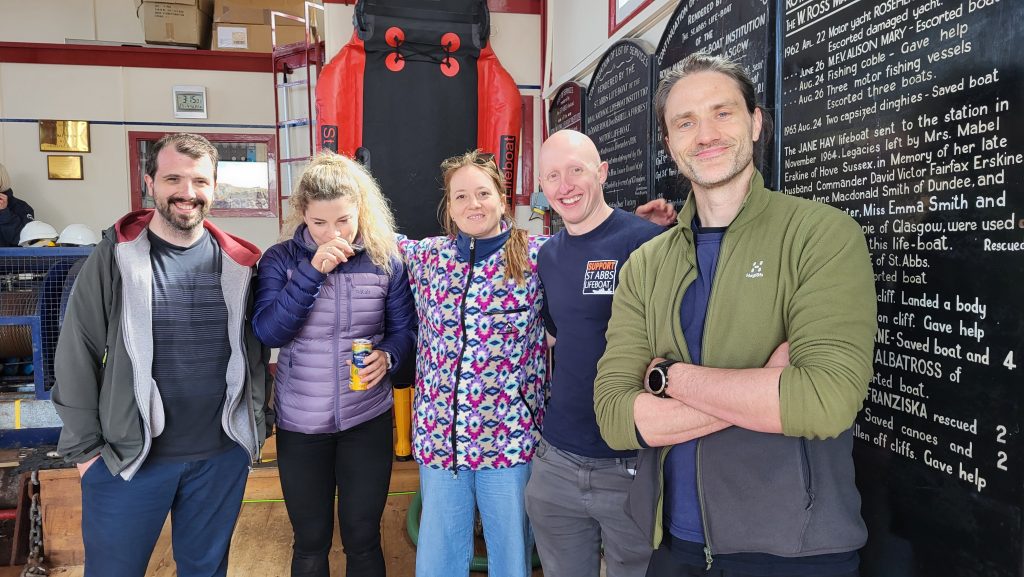
The training day is organised at our end by Susan Barry, a retired nurse who previously worked in neurosurgery, and who has become our main medical officer on the boat. We are also incredibly lucky to have external medical advisors and trainers Dr Lyle Moncur and Dr Ross Archibald, consultants in emergency trauma at Edinburgh Royal, as well as A&E doctors Dr Caitlin Rees, Dr Annabel Sick and Dr Daryl Whitehall attending on the day. Whilst both consultants frequently work in the field as Helicopter Emergency Medical Service (HEMS) doctors, they do realise that working on a lifeboat in full kit and heavy seas adds another level of difficulty to any emergency situation. The boat carries basic medical equipment including oxygen, a defibrillator, splints and bandaging, but its not like the equipment in hospitals or ambulances, the oxygen only lasts 45 minutes at most! It is therefore essential that all crew members are incredibly quick, efficient and effective in everything that they do on the boat – making split second decisions about whether to move the casualty quickly, or treat the casualty on site. All these types of things were practiced during the training day using different scenarios.
After practicing skills such as airway management, haemorrhage control, limb splinting, and restriction of spinal movement amongst others, the whole team agreed it was a hugely successful day with casualties rescued safely and transferred from the rocks in a complex final scenario. Its this kind of practice, using real scenarios and actors as casualties that helps us keep our skills and training sharp. Transferring a casualty with multiple traumas who is trapped in the rocks after a simulated fall from height is a scenario that we have faced in the past. Precision boat handling, team work and trauma skills are essential to ensure the casualty is transferred safely and swiftly to the boat.
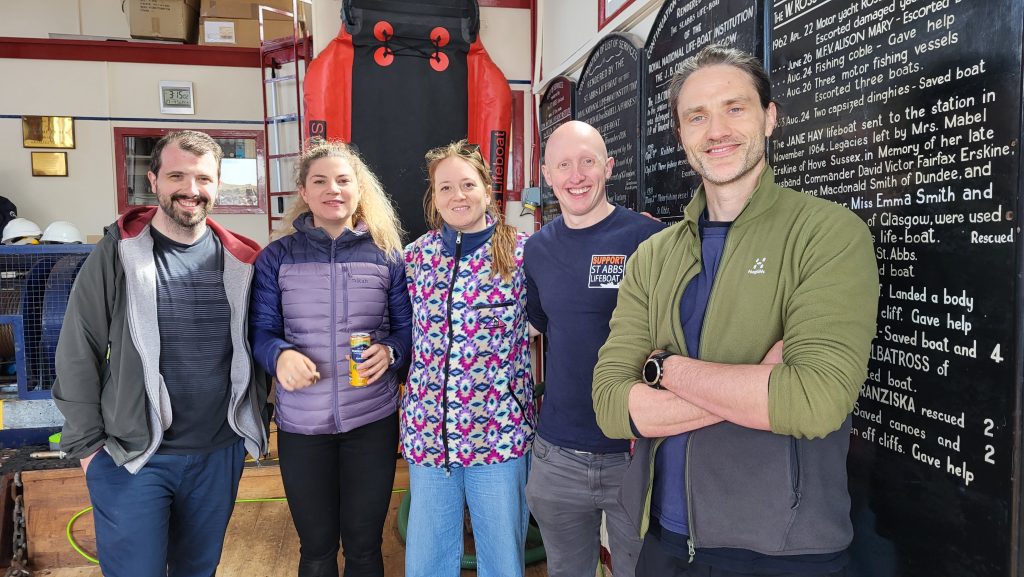
Our thanks go out to Susan, Ross, Lyle, Annabel, Caitlin and Daryl for organising the whole training day, and to the team for attending. Thanks also to many of our supporters who watched and donated during the day – we are always very grateful for your support.